Balbo Beard: What It Is and How to Shape One
The ImagineerThe workshop lamp is still on, and the drafting table is buried under face sketches. Every one has the same three shapes on it: a mustache floating on its own, a little strip under the lip, and a chin piece shaped like an anchor. No sideburns, no cheek lines. I've been building this beard on paper all night, and now it's time to build it on a face.
Here's the short answer. A balbo beard is a three-piece style: a mustache that doesn't connect to anything, a soul patch under the lower lip, and a chin beard that runs along the jaw a little but stops well before the ears. The cheeks and sideburns are shaved clean. Think of it as a goatee that got wider and smarter. It's named after Italo Balbo, an Italian aviator from the 1930s who wore it, and it got a big second life when Robert Downey Jr. made it his signature look. If you can grow a decent mustache and chin, you can build one.
- A balbo beard has three parts: a floating mustache, a soul patch, and a chin beard that hugs the jaw. Cheeks and sideburns get shaved.
- Grow everything out for 3 to 4 weeks before you shape it, so you have material to carve from.
- The gap between mustache and chin beard is what makes it a balbo. Keep that gap clean.
- It suits round and square faces well, and it's a smart move if your cheeks grow in patchy.
- Upkeep is a quick shave of the clean zones every 2 to 3 days and a trim of the chin piece once a week.
The balbo beard blueprint: three pieces, one shape
Every good build starts with a parts list. Here's mine.
- The floating mustache. It sits on the upper lip and does not connect down the sides of the mouth to the chin. It can be trimmed short and neat, or grown a bit fuller and waxed. The key is that it floats.
- The soul patch. The small strip of hair right under the lower lip. In a classic balbo it connects down to the chin beard, which gives the whole lower piece that inverted T or anchor shape.
- The chin beard. This is the foundation. It covers the chin and extends out along the jawline a little, usually stopping somewhere below the corners of the mouth or a touch past. It does not climb up the jaw toward the ears.
What's missing matters just as much: no sideburns, no cheek hair, and no connection between the mustache and the chin. Get those three absences right and the balbo beard style reads clearly from across a room.
Balbo vs Van Dyke vs goatee
These three get mixed up constantly, and I get it. They all live in the same neighborhood. Here's how I tell them apart on the drawing board.
| Style | Mustache | Chin piece | The tell |
|---|---|---|---|
| Balbo | Separate, floating | Soul patch joined to a chin beard that runs a little along the jaw | Wide, anchor-like lower piece |
| Van Dyke | Separate, often styled or curled at the tips | Narrower chin beard, often trimmed to a point | A pointed chin and a showier mustache |
| Classic goatee | Connected (circle beard) or none at all | Chin hair only, no jaw extension | Everything stays around the mouth and chin |
So balbo vs Van Dyke comes down to two things: width and point. A Van Dyke is narrow and pointed with a flashier mustache. A balbo is wider at the bottom and more squared off. If you want to see the whole goatee family side by side, our guide to goatee styles lays them out.
Who the balbo suits
I like to sketch a style on the face before I commit to it. A few patterns hold up pretty well.
- Round faces. The chin piece adds length and some structure to the lower face, which can make a round face look a bit more defined.
- Square or strong jaws. The balbo frames the jaw without hiding it. It looks sharp on a face that already has angles.
- Patchy cheeks. This is the big one. If your cheek growth never fills in, the balbo lets you shave that area on purpose. Nobody can call it patchy if it's part of the plan.
- Long or narrow faces. Use caution here. A long chin piece can make the face look even longer, so keep the chin beard shorter and a little wider.
The one thing you do need is a solid mustache and decent chin coverage. If those areas are thin, give them more time before you build.
How to trim a balbo beard, step by step
Here's the build plan. You'll want a trimmer with guards, a detail trimmer or a razor for the clean lines, small scissors for the mustache, and a mirror with good light. The guard sizes below are starting points. Every beard is different, so go one size longer than you think and work down.
- Grow it out first. Give it 3 to 4 weeks of full growth. You can't carve a shape out of stubble, and you need enough length to see where your hair grows thickest.
- Prep the hair. Wash and dry your beard, then comb it straight down. Clean, dry hair trims more evenly than damp hair, which shrinks a little as it dries.
- Clear the sideburns and cheeks. Shave or trim everything above the jawline down to zero, from the ears forward. This is where the balbo starts to take shape.
- Set the chin beard width. Decide where the chin piece ends on each side. A good guide is somewhere between the corners of your mouth and a little past them. Mark the edges with your trimmer, then remove everything beyond them along the jaw. Check both sides in the mirror often.
- Cut the mustache gap. Remove the hair that connects the mustache to the chin at the sides of your mouth. A clean gap of about a finger's width is a solid start. This gap is the signature of the style.
- Trim the chin beard length. A #2 to #4 guard (roughly 1/4 to 1/2 inch) works for most balbos. Shorter looks crisp and modern. Longer looks bolder.
- Shape the soul patch. Keep it slightly shorter than the chin beard, and make sure it flows down into the chin piece. Trim the edges so it's no wider than the space under your lower lip.
- Clean up the neckline. Shave below the jaw, setting your line about one to two fingers above the Adam's apple. Our guide to trimming your beard neckline covers this one in detail.
- Finish the mustache. Comb it down and trim along the lip line with scissors. Keep it off your lip so it doesn't end up in your coffee.
Take your time on steps 4 and 5. Those two cuts define the style, and they're the hardest to undo. If you want more on carving clean edges, read our guides on how to shape a beard and getting a sharp beard line-up.
Keeping your balbo beard sharp
A balbo is a high-contrast design. Clean skin next to defined hair. That means the clean zones show stubble fast, and the whole look gets fuzzy if you let it slide. Here's the upkeep schedule I'd draw up.
- Every 2 to 3 days: shave the cheeks, sideburns, neck and the mustache gap.
- Once a week: run the guard over the chin beard and touch up the soul patch.
- Every day: a few drops of beard oil on the chin beard and mustache, worked into the skin underneath.
Shaving the same zones often can leave skin a bit irritated. Shave with the grain, use a fresh blade, and give the skin some moisture afterward. If you get bumps or ingrown hairs that won't settle, a dermatologist can help.
My picks for building and keeping a balbo
None of these will grow you a fuller chin or fill in a thin mustache. What they do is keep the hair you've got soft, in place and smelling good.
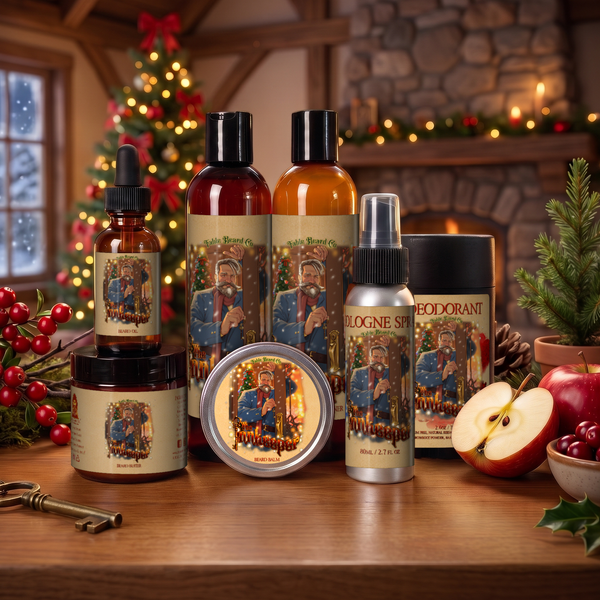
- The Imagineer Beard Oil. 1 oz, $18.99. Roasted Marshmallow, Citrus Flash, Warm Sandalwood. Built on castor, coconut, sweet almond, argan and jojoba oils plus fragrance oil. A few drops a day keep the chin beard soft and the skin underneath from getting dry.
- The Imagineer Beard Balm. $23.99. Same scent as the oil. Helpful for keeping the chin piece and soul patch neat once they get some length.
- The Barkeep Mustache Wax. $11.99. Unscented. Good if you grow the floating mustache a little longer and want it to stay where you put it.
Sweet almond and argan come from tree nuts, so if you have a nut allergy, talk to your doctor and patch test on your jaw first.
Not sure which scent is yours?
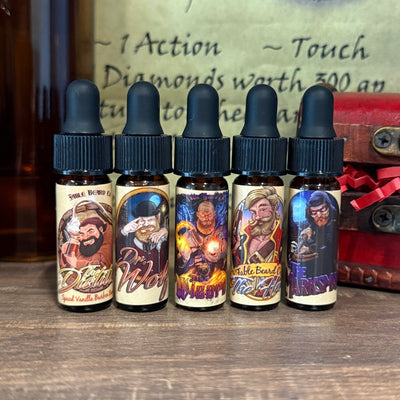
Every good design starts with a prototype, and scent works the same way. Try the Adventure Pack: five best-selling beard oil samples (The Hero, The Wizard, The Marksman, Dr. Wolf and The Distiller) for $29.99.
FAQ
What is a balbo beard?
A balbo beard is a three-piece style with a floating mustache, a soul patch, and a chin beard that extends a little along the jaw. The cheeks and sideburns are shaved, and the mustache does not connect to the chin.
What's the difference between a balbo and a Van Dyke?
Both have a mustache that floats free of the chin beard. A Van Dyke usually has a narrower, pointed chin beard and a showier mustache, while a balbo has a wider chin piece that runs a little along the jaw.
How long does it take to grow a balbo beard?
Most guys need about 3 to 4 weeks of full growth before shaping it. Growth speed varies a lot from person to person, so some will need longer.
What guard size should I use for a balbo beard?
A #2 to #4 guard, roughly 1/4 to 1/2 inch, is a good starting range for the chin beard. Start longer than you think you need and work down, since you can always take more off.
Is a balbo beard good for patchy beards?
It can be a great option if your cheeks are patchy but your mustache and chin grow in well. You shave the patchy areas on purpose, so the style uses your strongest growth.
One last thing
Back in the workshop, the sketches are pinned to the wall and the real thing is staring back at me from the mirror. Floating mustache, soul patch, anchor chin, clean cheeks. It matches the blueprint, which almost never happens on the first try. Give yourself room to adjust. A good design gets a few revisions before it's done.
Your beard, your story.
— The Imagineer