Does Cologne Expire? Shelf Life, Storage and How to Tell
The ScribeJournal entry 512. While cataloging the back shelves of the archive this morning, I found a bottle of cologne tucked behind a ledger from three winters ago. The label was faded, the liquid had gone the color of weak tea, and the first spray smelled less like a forest and more like a pickle jar. I set down my espresso, opened a fresh page and wrote one question across the top: does cologne expire?
Here's the short answer. Yes, cologne does expire, but not on a neat date like milk. Most fragrances don't carry a hard expiration date, and a well-stored bottle can smell right for years. Heat, light and air are what break it down, so a bottle that lives in a cool, dark drawer will outlast one sitting on a sunny bathroom counter. When it turns, you'll usually see it and smell it: darker color, a sour or vinegar-like first spray, and a scent that fades faster than it used to. Old cologne isn't usually dangerous, but it can irritate skin, so patch test anything that's changed.
- Cologne doesn't spoil overnight, but it does break down. A rough rule many perfumers use: several years unopened, and a few years once opened, depending on the formula and how you store it.
- Heat, light and air are the three things that age a fragrance fastest.
- Signs it's turned: darker or cloudy liquid, a sour or sharp alcohol opening, and a scent that dies quickly on skin.
- Store it in a cool, dark place with the cap on. The bathroom is the worst spot in the house.
- Expired cologne is rarely harmful, but it can irritate. Patch test if it smells off.
Does cologne expire? What the shelf life looks like
I wanted a number for my ledger. There isn't one official number. Fragrance makers aren't generally required to print an expiration date the way food makers are, and every formula ages a little differently. What you'll find instead is a set of common ranges that people in the fragrance world repeat.
A cologne stored badly can turn in months, and one stored well can outlive the ranges below.
| Situation | Typical cologne shelf life (rough) | What shortens it |
|---|---|---|
| Unopened, stored cool and dark | Often 3 to 5 years, sometimes longer | Heat swings, sunlight through the box |
| Opened, spray bottle, cap kept on | Often 1 to 3 years, sometimes much longer | Air getting in each time you spray, bathroom humidity |
| Opened, splash bottle or decanted | Usually shorter than a sealed spray | More air contact every time you open it |
| Left in a car, window sill or steamy bathroom | Can turn within months | Heat, direct light and humidity all at once |
So how long does cologne last unopened? Longer than opened, mostly because no fresh air has gotten in yet. A sealed spray bottle is a pretty good little vault. Once you start spraying, a bit of air enters the bottle each time, and that's when the clock starts ticking a little faster.
Why some colognes age faster than others
The notes matter. Bright top notes like citrus, bergamot and lime are made of lighter, more fragile molecules, so they tend to fade or go flat first. Heavier base notes like woods, amber, resins, tobacco and vanilla are sturdier and often hold up longer. If you want the full breakdown of top, heart and base, I wrote it all down in our guide to fragrance notes.
Concentration plays a part too. Fragrances with more aromatic oil and less alcohol are often said to keep longer than lighter splashes. If you've ever wondered where cologne sits on that scale, here's my entry on cologne vs perfume.
Does perfume expire too?
Yes. Does perfume expire on the same terms? Pretty much. Perfume, cologne, body spray: they're all fragrance oils carried in alcohol, and they all break down the same way. A richer perfume may hold a little longer than a light splash, but the rules for storage and spotting a bad bottle are identical.
What breaks a fragrance down
Three culprits show up in nearly every case file I've opened. I've numbered them, because that's what I do.
- Heat. Warmth speeds up the chemical reactions that change scent molecules. A bottle in a hot car or next to a radiator ages much faster than one in a closet.
- Light. Sunlight, and even strong indoor light over time, can break down fragrance compounds and shift the color. Clear glass on a sunny dresser is a slow-motion experiment you don't want to run.
- Air. Oxygen reacts with fragrance oils, a process called oxidation. Every time you open a splash bottle or leave the cap off, more air gets in. Lots of empty space in a half-used bottle also means more air sitting on top of the liquid.
Humidity and big temperature swings make all three worse, which is why the bathroom is the worst place in the house for cologne, even though it's where most of us keep it.
How to tell if your cologne has gone bad
You don't need a lab. You need your eyes, your nose and about thirty seconds. Run through this checklist:
- Color change. Liquid that's turned noticeably darker, more yellow or brown, or cloudy compared with when you bought it. (Some colognes are tinted to begin with, so compare against memory or a photo if you can.)
- Sour or vinegar top notes. The first spray smells sharp, metallic, sour or like straight rubbing alcohol, instead of the bright opening you remember.
- Flat or missing notes. The citrus is gone and only a dull base is left, or the scent smells muddy and confused.
- Short wear time. It used to last most of the day and now it's gone by lunch.
- Residue. Sediment at the bottom or a film on the glass.
One sign alone isn't proof. A slight color shift with a scent that still smells right is usually fine to keep wearing. Two or three signs together, especially that sour opening, usually means the bottle has turned.
How to store cologne so it lasts
Good storage is free, and it's the single biggest factor in cologne shelf life.
- Keep it cool and dark. A bedroom drawer, closet shelf or a dresser away from the window all work. Room temperature is fine; steady is better than hot.
- Get it out of the bathroom. Shower steam and daily temperature swings are hard on fragrance. Spray in the bathroom if you like, then put the bottle back in your room.
- Keep the box. The original box blocks light and is an easy home for the bottle.
- Cap it every time. Less air means slower oxidation.
- Skip the car and the gym bag. Both get hot. If you want a scent on the go, carry a small amount and refill it often.
- Use it. A cologne you actually wear won't sit around long enough to turn.
Is expired cologne bad for your skin?
Usually it's more of a scent problem than a safety problem. That said, as fragrance oils oxidize, some compounds can become more likely to irritate skin, and people with sensitive skin may notice redness or itching from an old bottle that never bothered them before.
If a bottle has changed and you still want to wear it, patch test first: spray a little on your inner forearm and wait a day. Any redness, itching or burning means it's time to retire it. Spraying onto clothing instead of skin is another option, though test a hidden spot first since darkened fragrance can mark fabric. If you have a skin condition or a reaction that doesn't settle down, check with a doctor or dermatologist.
For where to spray a fresh bottle so it lasts all day, see my notes on how to apply cologne.
My picks for the shelf
I won't hand you a made-up expiration date or batch-code system for ours, because the same rules apply to every fragrance on earth: store it cool and dark, cap it, and wear it. Here are the bottles in my own archive:
- The Scribe Cologne. 80 ml, $39.99. Decadent Chocolate, Steamed Froth, Dark Espresso. My own blend, and the bottle that sits beside my ledgers. Rich, warm and coffee-forward.
- The Distiller Cologne. 80 ml, $39.99. Mulled Spices, Aged Bourbon, and Deep Barrel Woods. A cologne that smells like patience, from the one man in Boron who knows more about aging than I do.
- The Highlander Cologne. 80 ml, $39.99. Smoked Firewood, Scotch and Nostalgic Mahogany. Smoky and woody, built for cold-weather evenings.
Want to see every scent side by side? Browse the full cologne collection. And if you wear cologne and beard oil together, pick notes that get along. Coffee and bourbon make good neighbors.
Not sure which scent is yours?
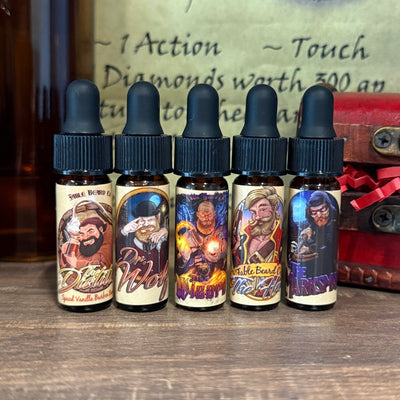
Before a scent earns a line in my ledger, I like to sample a few side by side. Try the Adventure Pack: five best-selling beard oil samples (The Hero, The Wizard, The Marksman, Dr. Wolf and The Distiller) for $29.99.
FAQ
Does cologne expire if it's never opened?
It can, but slowly. A sealed bottle kept cool and dark often stays good for several years because very little air gets in. Heat and light can still age it, so storage matters even before you open it.
How long does cologne last once it's opened?
A common rough range is 1 to 3 years for an opened spray bottle, and many last longer with good storage. Lighter, citrus-heavy scents tend to fade first, while woody and amber scents often hold up longer.
What does expired cologne smell like?
Often sour, sharp or vinegar-like on the first spray, with the bright top notes missing. It may also smell flat or muddy and fade much faster than it used to.
Can expired cologne hurt your skin?
It's usually not dangerous, but oxidized fragrance can be more irritating, especially on sensitive skin. Patch test on your inner forearm and stop using it if you get redness or itching. See a doctor or dermatologist if a reaction doesn't settle.
Where is the best place to store cologne?
A cool, dark, dry spot like a bedroom drawer or closet shelf, ideally in its original box with the cap on. Avoid the bathroom, window sills and your car.
One last thing
Journal entry 512, addendum. The old bottle from behind the ledger has been retired with full honors, and its replacement now lives in a drawer, in its box, far from the window and the steam. I've noted the date I opened it in the margin, because of course I have. Fresh espresso, fresh page, fresh cologne. The archive smells right again.
Your beard, your story.
— The Scribe