How to Remove Deodorant Stains (White Marks and Yellow Pits)
The Baker4:00 AM. The ovens are warming, the first batch of doughnut dough is rising, and I've just leaned my black apron straight into a bag of flour. Again. I've spent twenty years getting white powder off dark fabric and yellow grease out of white cotton, so when a regular leaned over the counter last week and asked me why his good shirts all have crusty yellow pits, I knew exactly where to start.
Here's the short answer to how to remove deodorant stains. Fresh white marks come off with friction and a little water: rub the fabric against itself, wipe with a damp cloth, or buff it with a clean sock or dryer sheet. Set-in yellow armpit stains need a soak and a scrub, usually dish soap, baking soda and hydrogen peroxide on white shirts, or an enzyme laundry detergent on colors. Skip chlorine bleach on yellow pits, keep the shirt out of the dryer until the stain is gone, and test anything new on a hidden seam first. Then fix the cause so you're not doing this every Sunday.
- White streaks on a dark shirt are fresh residue. Rub, wipe or buff them off in under a minute.
- Yellow pit stains are built up over many wears from sweat, product and fabric. They need a paste or soak, not just a wash.
- Use hydrogen peroxide on whites only. Use enzyme detergent on colors. Never chlorine bleach on yellow stains.
- Air dry until the stain is gone. Dryer heat can lock it in.
- Prevent the next one: apply to dry skin, give it a minute to set, and use less product.
Two different stains, two different fixes
Most people treat every deodorant stain the same way, and that's why half of them never come out. In my kitchen, flour on an apron and butter on an apron are two separate problems. One brushes off. The other soaks in and needs soap. Deodorant stains work the same way.
| Stain | What it looks like | What's going on | How hard to fix |
|---|---|---|---|
| Fresh white marks | Chalky streaks on dark shirts, usually by the armholes | Product sitting on top of the fabric | Easy, seconds |
| Yellow armpit stains | Yellowed, sometimes stiff patches on white or light shirts | Sweat, product and body oils built up inside the fibers over time | Moderate, takes a soak |
| Dark, stiff buildup on colors | A crunchy or shiny patch under the arm | Layers of residue that never fully washed out | Moderate, takes a few washes |
How to remove deodorant stains that are fresh (the white marks)
You're dressed, you're out the door, and there's a white stripe down the side of your black shirt. Don't panic and don't scrub with your thumb. Try these in order:
- Rub the fabric on itself. Pinch the shirt on either side of the mark and rub the fabric together. The friction lifts most dry residue right off.
- Buff it with something soft. A clean sock, a pair of nylons or a fresh dryer sheet works like a lint brush for powder.
- Dab with a damp cloth. Barely damp, not wet. Blot, don't smear, then let it air dry.
- Wash it inside out. If you've got a bit of buildup, turn the shirt inside out before it goes in the machine so the detergent hits the residue directly.
Deodorant marks on a black shirt are almost always a timing problem, not a product problem. You got dressed before the deodorant had a chance to dry. More on that below.
How to get rid of yellow armpit stains
Now the hard one. Yellow armpit stains don't happen overnight. They build up wear after wear, as sweat, deodorant or antiperspirant and the oils from your skin work into the fibers and don't fully rinse out. Aluminum-based antiperspirants are widely blamed for making the yellowing worse, since the aluminum compounds can bind with sweat and cling to cotton. Heat from the dryer and an iron helps set it all in place, like a crust on bread.
Treat white shirts and colored shirts differently. Here's my recipe for each.
For white cotton shirts: the paste method
- Mix about 1 tablespoon of dish soap, 2 tablespoons of baking soda and 2 tablespoons of 3% hydrogen peroxide into a paste. Make it fresh. Don't store it in a closed container.
- Spread it on both sides of the stained area.
- Work it in gently with an old toothbrush or your fingers.
- Let it sit for about an hour. Stubborn stains may need longer.
- Rinse with cool water and wash as usual.
- Check the stain before drying. If you can still see yellow, repeat. Only dry it once it's gone.
Hydrogen peroxide is a mild bleach. It's fine on most plain white cotton, but it can lighten colors and prints. Test it on an inside seam first and keep it off anything that isn't white.
For colored and dark shirts: the enzyme soak
Sweat and skin oils are protein and fat, and enzyme detergents are made to break those down. Soak the shirt in cool water with a scoop of enzyme detergent for a few hours or overnight, then wash as normal. Some people swear by a white vinegar soak (about one part vinegar to four parts cool water for 30 minutes) to loosen buildup before the wash. Both are gentler than peroxide, but you should still test a hidden spot on anything bright or delicate.
What not to do
- Don't use chlorine bleach on yellow pit stains. It can react with the proteins in sweat and make the yellow darker, not lighter.
- Don't machine dry a stained shirt. Heat sets stains. Hang it until you're sure it's clean.
- Don't scrub silk, wool or rayon with a brush. Delicate fabrics should go to a dry cleaner, and tell them what the stain is.
- Don't mix cleaning products beyond the simple recipe above. Bleach plus vinegar, for example, makes fumes you don't want in your laundry room.
And be realistic. A shirt with years of yellowing may come out lighter but not perfect. Sometimes the fibers themselves have broken down. That shirt has earned its retirement as a Saturday shirt.
How to prevent deodorant stains
Every baker learns the same lesson: cleaning up the mess is harder than not making it. These habits do most of the work.
- Apply to dry skin. Towel off fully after a shower. Damp skin spreads product around and makes it more likely to transfer.
- Give it a minute. Put deodorant on, then brush your teeth or comb your beard before you put a shirt on. That one minute stops most white marks.
- Use less. Two or three swipes is plenty. Caking it on doesn't make you smell better, it just puts more on your shirt.
- Wash shirts sooner. Don't let a sweaty shirt sit in the hamper for a week. The longer sweat sits, the more it sets.
- Turn shirts inside out to wash. The armpit area gets more of the detergent where it needs it.
- Think about what you're using. If you sweat heavily and use an aluminum antiperspirant, that may be part of your yellow-pit problem. A deodorant works on odor rather than blocking sweat, and plenty of people find the switch helps with staining.
If you're weighing that trade, I'd read our breakdown of aluminum-free deodorant vs antiperspirant first. It lays out what each one does and doesn't do, plainly. And if you do make the switch, expect a short adjustment period. Our guide to switching to natural deodorant walks you through those first couple of weeks.
One honest note: no deodorant, natural or otherwise, will undo the yellow already in your shirts. Changing products only helps the shirts you buy next. The ones you have now still need the paste.
My picks from the bakery shelf
Stains start in the shower, so here's what I keep by the sink. Two products, that's all.
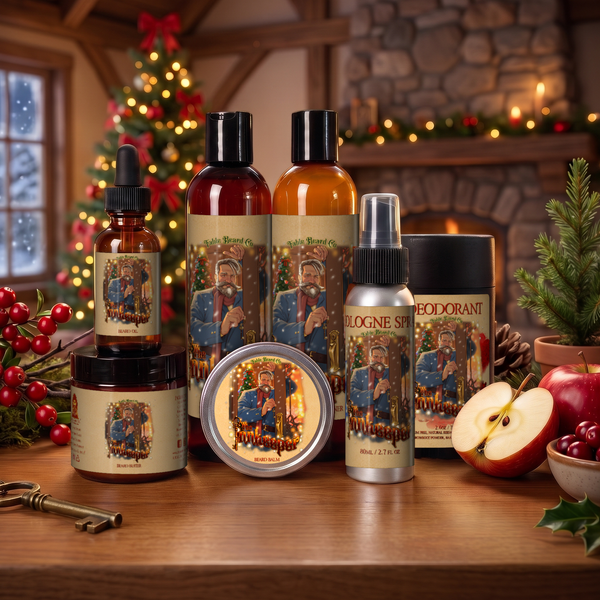
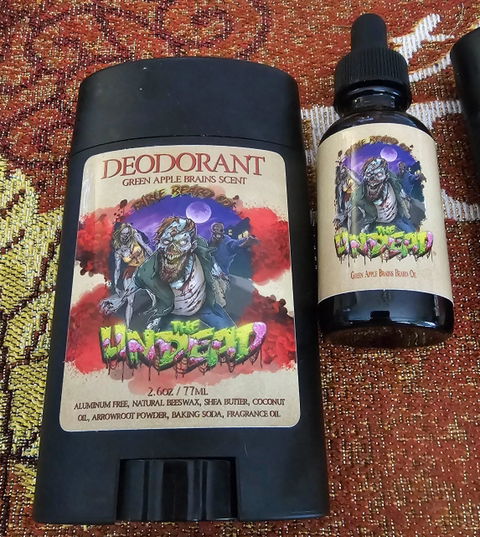
- The Baker Deodorant. $13.99. Fresh Doughnuts, Warm Vanilla Sugar, Hint of Cinnamon Spice. A natural deodorant that handles odor, not sweat, so you'll still sweat. Apply to dry skin and let it set before you dress, same as any stick.
- The Baker Body Wash. $20.00. Same warm, sweet scent. Washing your pits well every day keeps sweat and old product from piling up on your skin and, from there, on your shirts.
Want a different scent? Our natural deodorant lineup has one to match most of our beard oils.
Not sure which scent is yours?
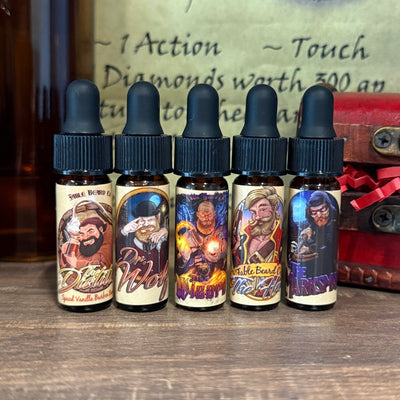
Matching a beard oil to your deodorant? Taste a few flavors before you order the whole tray. Try the Adventure Pack: five best-selling beard oil samples (The Hero, The Wizard, The Marksman, Dr. Wolf and The Distiller) for $29.99.
FAQ
How do you get deodorant marks off a black shirt fast?
Rub the fabric against itself, or buff the mark with a clean sock or dryer sheet. If anything is left, dab it with a barely damp cloth and let it air dry.
What causes yellow armpit stains?
They build up over many wears from sweat, skin oils and deodorant or antiperspirant residue in the fabric. Aluminum-based antiperspirants are often blamed for making it worse, and dryer heat helps set the stain.
Can I use bleach on yellow pit stains?
Skip chlorine bleach. It can react with the proteins in sweat and make yellow stains darker. On white cotton, a paste of dish soap, baking soda and 3% hydrogen peroxide is a better bet.
How do I remove deodorant stains from colored shirts?
Soak the shirt in cool water with an enzyme laundry detergent for a few hours or overnight, then wash as usual. Avoid hydrogen peroxide on colors, and test any new method on a hidden seam first.
Will switching deodorants get rid of the stains I already have?
No. A new deodorant can help prevent future stains, but existing yellow pits still need to be treated with a paste or soak.
How do I prevent deodorant stains?
Apply deodorant to fully dry skin, use two or three swipes, and wait a minute before getting dressed. Wash sweaty shirts soon, inside out, and air dry anything that still shows a stain.
One last thing
5:30 AM. The doughnuts are glazed, the apron's been brushed off (mostly), and the regular came back this morning in a white shirt that was actually white. He ordered a dozen to celebrate. I told him the trick is the same as with dough: a little patience before you rush to the next step. Let it set, then get dressed.
Your beard, your story.
— The Baker