What Is Oud? The Smell, the Story and How to Wear It
The GrowerThe autumn market comes to the edge of my farm every year when the apples are in. This season a caravan trader set up between the cider press and the honey stall, and he opened a small wooden box for me like it held jewels. Inside were dark, oily splinters of wood. He held one under my nose. Smoke, old leather, something sweet underneath, and a faint barnyard note I know well from my own fields. I bargained for a sliver no longer than my thumbnail, and I paid more for it than I get for a bushel of pears.
So, what is oud? Oud is the dark, fragrant resin that forms inside Aquilaria trees after they're wounded and infected by a mold or fungus. The tree fights back by flooding its heartwood with resin, and that resin-soaked wood (called agarwood) is what perfumers call oud. It smells woody, smoky, resinous and a little animal, like leather and incense. Real oud is rare and expensive, so most affordable oud fragrances use an oud accord built to capture the same character.
- Oud and agarwood are the same thing: resin-filled heartwood from Aquilaria trees that were infected by a mold. Healthy trees don't make it.
- It smells deep, woody, smoky and resinous, with a leathery, slightly animal edge. Some ouds lean sweet and fruity, others dark and barnyard.
- Natural oud is scarce and slow to form, which is why the oil costs so much. Most everyday oud colognes use an oud accord instead.
- Wear it lightly. One or two sprays on skin, best in cool weather and evenings, and let fruit or amber soften it if pure oud feels like a lot.
What is oud, exactly?
Out on the farm, a hurt tree doesn't just give up. It seals the wound. An apple tree with a broken limb will callus over the break, and Aquilaria trees do something similar but far more interesting. When the wood gets infected by a particular mold, the tree pumps resin into its heartwood to wall the infection off. Over years, that pale, soft wood turns dense, heavy and nearly black.
That dark wood is agarwood. "Oud" is the Arabic word for it, and it's used for both the wood and the oil distilled from it. Aquilaria trees grow across South and Southeast Asia (India, Cambodia, Vietnam, Malaysia and neighboring countries), and oud has been burned as incense and worn as perfume across Asia and the Middle East for centuries.
Here's the part most answers to "what is oud" skip, and it matters for your nose: a healthy Aquilaria tree has no oud in it at all. Only a small share of wild trees ever get infected the right way, and the resin takes years to build. You can't rush it, same as an orchard.
Why oud is so expensive
Three reasons, and any farmer would recognize them.
- Low yield. Most trees never make it, and the ones that do make it slowly. Older trees with more resin are prized most.
- Hard harvest. The resin-heavy wood has to be cut out of the tree and sorted by hand. Turning wood into oil takes a large pile of chips for a small vial.
- Too much demand for the trees. Wild Aquilaria were harvested so hard that the trees are now protected under international trade rules. Plantations where growers infect trees on purpose have helped, but top-grade natural oil still sells for prices that make my sliver look cheap.
What does oud smell like?
If you've never smelled it, picture a few things at once:
- Woody, but darker and heavier than cedar or sandalwood. Old wood, not fresh-cut.
- Smoky, like incense or a fire that burned down hours ago. Soft smoke, not a campfire in your face.
- Resinous, with a warm, balsamic sweetness that sits close to amber or dark honey.
- Animal, a leathery, musky, skin-like undertone. Some people call it "barnyard." That's the note people either love or can't stand.
Oud also changes depending on where it grew. Ouds from Cambodia often lean sweeter and fruitier, while some Indian ouds are denser and more animal. It shifts on your skin too. The first minutes can be sharp or medicinal, and it settles into something warm and smooth after a while.
In perfumes, oud almost never works alone. Perfumers pair it with rose, saffron, amber, vanilla, sandalwood and spice. Pairing it with fruit, the way my own blend does, is less common, and it makes oud a lot friendlier for a first-timer.
Real oud vs. synthetic oud
Let's be plain about this, because a lot of labels aren't. Pure natural oud oil is rare, costly and usually sold by the gram to collectors. Most oud colognes and oud fragrances you can buy for an ordinary price use an oud accord. That's a blend of aroma materials (sometimes with a little natural oud, often with none) built to smell like the real thing.
That's not a scam. An accord is more consistent from batch to batch, it doesn't depend on cutting down wild trees, and it's usually smoother and less barnyard than raw oud.
| Natural oud oil | Oud accord (most oud colognes) | |
|---|---|---|
| What it is | Oil distilled from infected agarwood | A blend of aroma materials built to smell like oud |
| Price | Very high, often sold by the gram | Ordinary fragrance prices |
| Smell | Varies a lot by region and batch, can be very animal | Consistent, usually smoother and sweeter |
| Best for | Collectors and traditional use | Everyday wear and first-timers |
How to wear an oud cologne
Oud is a heavy crop. You don't need much of it on the cart. Here's how I'd wear it:
- Start small. One spray, two at most. Oud is a base note that hangs around, and too much reads as smoke in a closed room.
- Spray skin, not beard. Neck, chest or wrists. Alcohol-based fragrance can dry out the hair, so keep it off your beard and let your beard oil carry scent there.
- Pick your season. Oud feels best in fall and winter, the same months I'm pressing cider and stacking wood. In July heat it can feel thick.
- Evenings over office hours. It's a natural fit for dinners, the cold walk home and late fires. If your workplace is scent-shy, save it for after.
- Let something soften it. Fruit, amber or vanilla pull oud toward warm and approachable. If straight oud feels like a lot, a blend is the easier start.
If you're unsure how cologne strength works in general, read cologne vs. perfume, and the guide on how to apply cologne covers placement in more detail.
Who oud suits
Oud isn't a man's or a woman's note. It's worn by everyone in the places that have loved it longest. It suits you if you like dark, warm smells (leather jackets, wood smoke, whiskey barrels, old libraries) and you want a scent people remember. It's probably not for you if you like clean, soapy, citrus-fresh scents, or if strong smells give you headaches. Try it on your own skin before you decide.
My picks: oud the Grower's way
My blend is Crisp Apples, Fresh Pear, Warm Oud and Aged Amber. It's the orchard at harvest with smoke from the drying shed drifting over. The fruit comes up first, and the oud and amber are what's left on your collar at night. It's a gentle way into oud if you're curious but not sure.
- The Grower Cologne. 80 ml, $39.99. Crisp Apples, Fresh Pear, Warm Oud and Aged Amber. This is the one for your neck and chest.
- The Grower Beard Oil. 1 oz, $18.99. Same notes, made with castor, coconut, sweet almond, argan and jojoba oils plus IFRA-compliant fragrance oil. It softens your beard and puts the scent right under your nose. Sweet almond and argan come from tree nuts, so patch test first, and skip it if you have a nut allergy.
- The Grower Deodorant. $13.99. Same blend for under the arms, so your whole day matches.
- The Djinn Cologne. 80 ml, $39.99. Not an oud, but my neighbor from the desert brings Egyptian Cologne, Warm Sandalwood and Dragon's Blood. If you love oud's warmth and resin but want less smoke, smell this next.
Wear the Grower oil with the Grower cologne and you won't have two scents fighting on one face. For more on matching the two, read beard oil and cologne. You can browse every scent in the cologne collection and the full beard oil lineup. If smell is the whole reason you're shopping, our guide to the best smelling beard oil sorts the shelf by scent family.
Not sure which scent is yours?
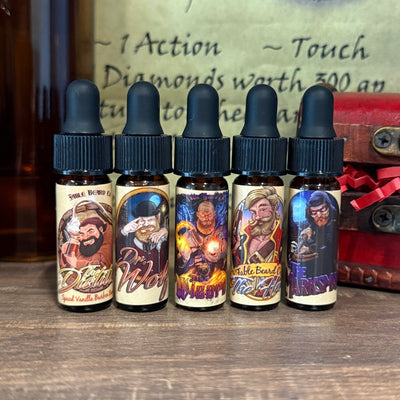
A good farmer tastes a few apples before he plants a whole row. Try the Adventure Pack: five best-selling beard oil samples (The Hero, The Wizard, The Marksman, Dr. Wolf and The Distiller) for $29.99.
FAQ
Is oud the same as agarwood?
Yes. Agarwood is the resin-filled heartwood of infected Aquilaria trees, and oud is the Arabic name used for both the wood and the oil distilled from it.
What does oud smell like?
Deep, woody and smoky, with a warm resinous sweetness and a leathery, slightly animal edge. Some ouds lean fruity and sweet, others darker and more barnyard.
Why is oud so expensive?
Only infected Aquilaria trees make it, the resin takes years to form, and it takes a lot of wood to distill a little oil. Wild trees are also protected, which limits supply.
Is oud cologne real oud?
Usually not entirely. Most oud colognes at everyday prices use an oud accord, a blend built to smell like oud. Judge it by how it smells on your skin.
Is oud a masculine scent?
No. Oud is worn by everyone in the regions that have used it longest. It suits anyone who likes warm, woody, smoky scents.
When should I wear oud?
Cool weather and evenings suit it best. Start with one or two sprays on your neck or chest, because a little oud goes a long way.
One last thing
That sliver from the caravan trader sits in a jar on my windowsill now, next to the seed packets. On cold mornings I open the lid and the kitchen smells like smoke and old wood for a moment before the cider takes over. I didn't need a whole box. A thumbnail of it was plenty, and that's the best advice I have about oud.
Your beard, your story.
— The Grower