Frizzy Beard: Why It Happens and How to Fix It
The ImagineerPrototype day in my workshop, and the problem on the bench was my own frizzy beard. Blueprints pinned to every wall, a kettle going, rain hammering the skylight. I caught my reflection in a brass gear housing and nearly dropped the wrench. My beard had puffed out like a dandelion clock. The air had turned thick and wet, and my whiskers had soaked it up. So I did what I always do with a problem. I grabbed a pencil and started sketching fixes.
Here's what the sketches came down to. A frizzy beard is a dry beard reacting to its surroundings. When beard hair is low on moisture and its outer layer is roughed up, it pulls water from humid air, swells unevenly and sticks out in every direction. Curl, hot water, harsh soap, towel rubbing and high heat all make it worse. The fix is to put moisture back and seal it in: a gentle wash, conditioner, beard oil on damp hair, then a balm or butter on top, plus gentler drying and combing.
- Frizz is hair that's dry and roughed up, so it grabs moisture from the air and swells in every direction. Humidity, curl, hot water, harsh soap, towel rubbing and high heat are the usual causes.
- The fix is a stack: gentle wash, conditioner, beard oil on damp hair, then a balm or butter on top to seal it.
- Pat dry instead of rubbing, use cool air if you blow-dry, and comb or brush gently once the beard is oiled.
- Give any change a week or two of daily use before you judge it. Frizz from split ends only goes away with a trim.
Why your beard frizzes in the first place
Every hair has an outer layer of tiny overlapping scales, like shingles on a roof. When they lie flat, the hair looks smooth and reflects light. When they lift, the hair feels rough, catches on its neighbors and drinks up whatever moisture is floating in the air. That uneven swelling is frizz.
Beard hair is already set up for it. It tends to be coarser and curlier than the hair on your head, and the skin underneath doesn't always make enough natural oil to coat a beard past a few weeks of growth. Here's my parts list of what lifts those shingles:
- Dryness. The root cause. Thirsty hair grabs water from the air.
- Humidity. Rainy days, summer heat, a steamy bathroom. The air hands your dry beard all the water it wants.
- Curl pattern. Every bend in a curly hair is a spot where the scales lift more easily, and oil from the skin has a harder time traveling down a coiled hair. If that's you, my workshop neighbors wrote a whole guide on the curly beard.
- Towel rubbing. Scrubbing a wet beard with a towel roughs up the surface exactly when it's most fragile.
- Heat. Hot showers and a hair dryer on full blast pull moisture out fast.
- Over-washing. Daily washing with bar soap or regular shampoo strips the oils that keep hair smooth.
- Split ends. Frayed tips stick out no matter what you put on them.
How to fix a frizzy beard: seven prototypes that work
In the workshop we test one change at a time so we know what actually did the job. I'd do the same with your beard. Here are the prototypes, in the order I'd build them.
Prototype 1: Wash less, and wash gentler
Swap bar soap and regular shampoo for a sulfate-free beard wash, two or three times a week. Rinse with plain water on the other days. Turn the water down from scalding to warm. If you're unsure how often is right for your beard, there's a full guide on how often to wash a beard.
Prototype 2: Condition every time you wash
A rinse-out beard conditioner is the part most guys skip, and it's the step that most directly smooths the hair surface. Leave it in for a minute or two, then rinse with cooler water. Our guide on whether you need beard conditioner explains the difference it makes.
Prototype 3: Pat, don't rub
Press the towel into your beard and squeeze, top to bottom. No back-and-forth scrubbing. A microfiber towel or an old cotton T-shirt is gentler than a thick terry towel.
Prototype 4: Oil while it's damp
Beard oil is the core of the build. Put it on when your beard is damp, not dripping. A few drops for a short beard, more as it gets longer. Work it into the skin first, then pull it through to the ends. Damp hair spreads oil more evenly, and you lock in some of that water before the air can get to it.
Prototype 5: Seal it with balm or butter
Oil alone can lose the fight on a muggy day. A layer on top acts like a weatherproof coating. Beard balm adds light hold, so it's the one I reach for when flyaways are the problem. Beard butter is softer and creamier with less hold, which suits a coarse beard that feels dry more than wild. If you can't decide, beard oil vs beard butter breaks it down. Use a pea-sized amount, warm it in your palms and smooth it over the surface in the direction your beard grows.
Prototype 6: Comb or brush, but gently
Never drag a tool through a dry, tangled beard. That's how you make more frizz. After the oil goes in, a wide-tooth comb detangles and spreads product, and a soft brush flattens and smooths the outer layer. I use both: comb first, brush last. Start at the ends and work up. More on technique in how to use a beard comb.
Prototype 7: Cool air, pointed down
If you blow-dry, keep the dryer on low heat or the cool setting, aim the airflow downward along the hair and keep it moving. Air pointed up into the beard lifts the scales you just worked to flatten. The full method lives in how to blow-dry a beard.
Last rule of the workshop: hands off during the day, since every tug roughs the hair up again. And give any change a week or two of daily use before you judge it.
Match the fix to your kind of frizz
Not every beard needs every prototype. Here's how I'd sketch it out:
| What you see | Likely cause | Start here |
|---|---|---|
| Fine all morning, puffy by lunch on rainy days | Humidity on dry hair | Oil on damp hair, then balm to seal |
| Frizzy right after every shower | Hot water, harsh soap, towel rubbing | Gentler wash, conditioner, pat dry |
| Rough and wiry all the time | Coarse, dry hair | Oil daily plus butter, conditioner when you wash |
| Curls that spring out in every direction | Curl pattern | Conditioner, oil while damp, comb then balm |
| Fluffy ends that won't lie down | Split ends | A light trim of the tips |
| Frizz after blow-drying | Heat and airflow direction | Low or cool heat, air pointed down |
If your beard feels more like steel wool than a frizz cloud, the companion guide on how to soften a coarse beard goes further. For fraying tips, see beard split ends.
Give it a week or two of doing this daily before you decide it works or doesn't. Hair responds to habits, not one-off rescues.
What I keep on my own workbench
I lean on my own scent here, because it's the one I wear while I tinker. All three share the same blend of Roasted Marshmallow, Citrus Flash and Warm Sandalwood, so they stack without fighting.
- The Imagineer Beard Oil. 1 oz, $18.99. Made with castor, coconut, sweet almond, argan and jojoba oils plus fragrance oil. The daily base layer.
- The Imagineer Beard Balm. 2 oz tin, $23.99. My pick for humid days and flyaways, since it adds light hold on top of the oil.
- The Imagineer Beard Butter. 4 oz, $26.99. Shea and cocoa butter with a touch of beeswax. Softer than balm, great for a dry, coarse beard and for nights.
Sweet almond and argan come from tree nuts, so if you have a nut allergy, check with your doctor and patch test on your jaw before you use any of these.
Not sure which scent is yours?
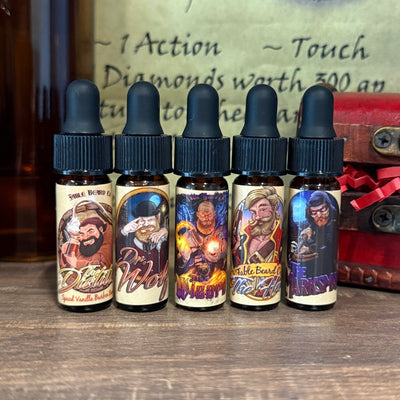
No inventor commits to one design before testing a few. Run your nose through five before you pick the one you'll wear every day. Try the Adventure Pack: five best-selling beard oil samples (The Hero, The Wizard, The Marksman, Dr. Wolf and The Distiller) for $29.99.
FAQ
Why is my beard so frizzy?
Usually because the hair is dry and its outer layer is roughed up, so it soaks up moisture from humid air and puffs out. Curly or coarse beard hair, hot showers, harsh soap, towel rubbing and high heat all make it worse.
Does beard oil help a frizzy beard?
Yes, it's the base layer of most frizz fixes. Oil softens the hair and helps it lie smoother, and it works best on a damp beard. For heavy frizz or humid days, add a balm or butter on top to seal it in.
Is a brush or a comb better for frizz?
Both help when you use them gently on an oiled beard. A comb is better for detangling and spreading product, and a brush helps flatten and smooth the surface. Avoid dragging either through a dry, tangled beard.
Should I blow-dry my beard if it frizzes?
You can, but keep the dryer on low heat or cool, point the air downward and keep it moving. Air-drying after a gentle pat with a towel is the safer default.
How often should I wash a beard that frizzes?
Most beards do well with a gentle beard wash two or three times a week and plain water rinses in between. Washing daily with harsh soap strips the oils that keep frizz down.
Can trimming fix a frizzy beard?
Only the part caused by split ends. Frayed tips stick out no matter how much product you use, so a light trim of the ends helps. The rest of the frizz is a moisture and handling problem.
One last thing
Back to that rainy prototype day. I rinsed my beard, pressed it dry, oiled it damp, sealed it with balm and pointed the dryer down for once. Then I went back to work while the rain kept going. By supper my beard was still lying flat, and the gear housing showed a man instead of a dandelion. I pinned the routine to the wall next to the other blueprints. It's the one design I didn't have to revise.
Your beard, your story.
— The Imagineer