How to Use a Beard Comb (and Which One to Get)
Captain CrimsonShip's log, day 41. A squall hit us off the point just after dawn, and while I was lashing down the mainsail my comb jumped out of my coat pocket and went straight over the rail. Gone. No spare aboard. By day 44 my beard had knots in it like wet rope, the oil I put on sat in one greasy patch on my chin, and the bosun asked if a gull had nested in there. All hands learned something that week.
Here's the plain answer. To use a beard comb, start with a beard that's dry or just damp and oiled. Work out knots from the bottom of the beard first, then comb from the roots out in the direction you want the hair to lie: down on the cheeks, straight down on the chin, and out to the sides on the mustache. Go slow, don't rip through snags, and pick a comb with wide teeth for detangling and finer teeth for finishing.
- Detangle from the bottom up. Comb out the last inch first, then start a little higher each pass until you reach the skin.
- Comb dry or damp, not soaking wet. Wet hair stretches and snaps more easily, so use your fingers or a wide-tooth comb right after a shower.
- Comb right after beard oil. It spreads the oil from root to tip so it doesn't pool on your chin.
- Wide teeth for detangling and longer beards, fine teeth for short beards and the mustache. Wood or smooth-edged acetate beats a cheap plastic comb with rough seams.
- Pull the hair out of your comb every few days and wash it every week or two.
How to comb a beard, step by step
Standing orders. About two minutes once you know them.
- Start dry or damp. If you just showered, pat your beard with a towel until it's damp, not dripping.
- Oil first. Put on your beard oil (3 to 5 drops for a short beard, more for a long one) and work it in with your fingers.
- Detangle from the bottom up. Hold the beard near the middle so you're not tugging the skin. Comb only the bottom inch. Once that runs clean, move up an inch and comb down through the ends again. Keep climbing until you're starting at the roots.
- Lift, then lay it down. For a fuller look, comb the hair under your jaw and chin up and out once, against the grain. Then comb everything back down the way you want it to sit.
- Set the direction. Cheeks go down and slightly back toward the ears. The chin goes down. The mustache goes out to the sides from the center of your lip, or straight down if it's short and thick.
- Balm if you need hold. Smooth a little over the top, then one light pass with the comb.
Hit a knot? Stop. Don't haul on it like a stuck anchor line. Hold the hair above the knot, work the comb into the bottom of it, and pick it apart a few teeth at a time. If you're new to oil, there's a full rundown in how to use beard oil.
Wet or dry: when to comb
Hair is weaker when it's wet. Drag a fine comb through a soaking beard and you'll find a pile of hairs on the sink. The rule on my ship:
- Soaking wet: fingers only, or a very wide-tooth comb with a light hand.
- Damp after a towel: the best time to oil and do your main comb.
- Dry: fine for touch-ups through the day, and the best time to use a fine-tooth comb for the final shape.
Once or twice a day is plenty for most beards: a proper comb in the morning and a quick touch-up later if the wind gets at it. Fifty times a day just thins the ends and scratches your skin.
Which beard comb to get
We don't make combs at Fable, so I'm not selling you one. Here's what to look for when you're standing in front of a rack of them.
Wide tooth vs fine tooth
Tooth spacing matters more than anything else. Wide teeth slide through thick, curly or long beards and pull out knots without tearing. Fine teeth catch more hair, so they give a neater finish on short beards and mustaches but snag on anything long or wavy. If you only buy one, get a dual comb with a wide side and a fine side.
A rough guide by length:
- Under about an inch: a small fine-tooth comb, or just your fingers. There isn't much to comb yet.
- One to four inches: a dual-tooth comb. Wide side for the main work, fine side for the shape.
- Over four inches, or curly: wide teeth, and plenty of patience on the bottom-up detangle.
Wood, horn or plastic
Wood is the classic: smooth, light and pleasant to use. Many guys find it builds less static than cheap plastic, but I'd keep that claim modest. A well-oiled beard rarely flies around whatever comb you use. The downside: wood doesn't like being soaked.
Horn combs are smooth and feel great, but they cost more and can crack if you leave them in hot water or a hot car. If you'd rather skip animal products, look for cellulose acetate. It looks a lot like horn and holds up well to washing.
Plastic isn't evil. The trouble is cheap molded combs with a seam down each tooth. Run a fingernail along the teeth. If you feel a ridge, it can catch and split hairs.
Whatever you pick, check that the tips of the teeth are rounded. Pointed teeth scratch, and you'll feel it every morning.
Beard comb vs brush
A boar-bristle brush and a comb aren't rivals. They do different jobs, and plenty of sailors carry both.
| Job | Comb | Boar-bristle brush |
|---|---|---|
| Detangling knots | Best tool. Wide teeth pick knots apart. | Poor. Bristles tend to skate over knots or pull them tighter. |
| Short beards and stubble | Not much to grip | Better. Lays short hair flat and reaches the skin. |
| Long beards | Essential, especially the wide side | Good for smoothing the top layer after combing |
| Spreading oil and balm | Good, gets it from root to tip | Very good, spreads it evenly over the surface |
| Training hair to lie a certain way | Good for direction and parting the mustache | Good for an overall smooth shape |
| Carrying in a pocket | Easy | Bulky |
My routine for a medium beard: oil, comb out the knots, brush the surface smooth, then a final comb to set the edges. For stubble, a brush alone does the job. Once you've got some length to work with, how to style a beard takes it from there.
What I put in my beard before the comb
A comb on a dry, bare beard is rowing with one oar. Here's what I keep in my sea chest.
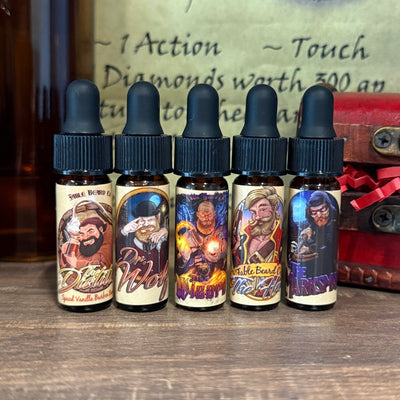
- Captain Crimson Beard Oil. 1 oz bottle, $18.99. Creamy coconut, sea salt and fresh vanilla. A few drops before every comb and the hair glides. It's made with castor, coconut, sweet almond, argan and jojoba oils. Sweet almond and argan come from tree nuts, so patch test first, and check with your doctor if you have a nut allergy.
- Captain Crimson Beard Balm. 2 oz tin, $23.99. Coconut, warm amber, sea salt and vanilla. Balm adds a bit of hold, so this is what I use after combing when the wind wants to rearrange everything I just fixed.
Want a different scent? The oil and balm kits pair the two in other characters' scents.
How to clean a beard comb
A comb collects oil, balm, dead skin and loose hair. Leave it and you're combing yesterday's gunk into a clean beard.
Every few days: pull the trapped hair out from between the teeth.
Every week or two: give it a real wash.
- Plastic or acetate: soak for ten minutes in warm water with a drop of dish soap or beard wash, scrub between the teeth with an old toothbrush, rinse and let it dry flat.
- Wood: don't soak it. Scrub it gently with a toothbrush dipped in a little soapy water, wipe it with a damp cloth, then towel it dry and let it air out.
- Horn: treat it like wood. Lukewarm water, no long soaks, dry it right away.
If the teeth get chipped or rough, retire it. Combs are cheap next to a beard you spent a year growing.
FAQ
Should I comb my beard up or down?
Mostly down, the way the hair grows. Some guys comb up and out under the jaw once to add fullness, then comb everything back down to set the shape. The mustache usually goes out to the sides from the center.
Is it better to comb a beard wet or dry?
Damp or dry. Soaking wet hair stretches and breaks more easily, so towel it off first or use your fingers. Damp and freshly oiled is the sweet spot for your main comb.
Do I need a comb or a brush?
For stubble and short beards, a boar-bristle brush does more. Once your beard is long enough to tangle, you need a comb to work out knots, and a brush is a nice extra for smoothing the surface.
Does combing make a beard grow faster?
No. Combing doesn't change how fast or where your hair grows. It does make the beard you have look neater and fuller, and it spreads your oil so the skin underneath doesn't get left out.
How often should I clean my comb?
Pull out trapped hair every few days and wash it every week or two. Plastic and acetate can soak in warm soapy water. Wood and horn should only be scrubbed and wiped, then dried right away.
One last thing
We made port on day 47. Before I bought supplies, before I bought rum, I bought two combs. My crew still tells the old tale of the fabled comb of Captain Red, and now they've got a new one about a captain who looked like a shipwreck for six days. Learn from my log, sailor. Keep a spare.
Your beard, your story.
— Captain Crimson