What Does Sandalwood Smell Like? (And Why It's in So Many Men's Scents)
The DjinnThe night market at the edge of the dunes never closes, and neither do its merchants. One of them pressed a pale stick of wood into my hand and swore on his grandmother's camel that it was true sandalwood. I breathed in and laughed so hard the lanterns swayed. It smelled like a pencil. A fine pencil, I'll grant him, but a pencil.
So, what does sandalwood smell like? Soft, creamy wood. Think warm wood with a milky, almost buttery edge, a touch of sweetness, and none of the dry, sharp bite you get from cedar or pine. It's quiet rather than loud, it sits close to the skin, and it lingers long after the brighter notes in a fragrance are gone. That smooth glow is why sandalwood turns up at the base of so many men's colognes and beard oils: it rounds off everything else in the bottle.
- Sandalwood smells creamy, soft and woody, with a milky sweetness and gentle warmth. Smooth, not sharp.
- Indian sandalwood (Santalum album) is the classic creamy one. Australian sandalwood (Santalum spicatum) is drier, greener and a little more resinous.
- It's a base note. It evaporates slowly, so it stays after the top notes fade and holds the rest of the blend together.
- Most sandalwood in modern fragrance is partly or fully synthetic, because the real oil is rare and expensive.
- It pairs with almost anything: citrus, lavender, spice, florals, vanilla and other woods.
What does sandalwood smell like, note by note?
Hold a good sandalwood under your nose and you'll pick out a few layers.
- Creamy. This is the word every perfumer reaches for first. It has a smooth, milky texture, like warm wood rubbed with butter.
- Soft wood. It's clearly a wood, but a polished one. No splinters, no sawdust.
- Warm and a little sweet. Not sugary. More like the warmth of skin in the sun.
- A faint resin or leather depth. Better oils carry a hint of balsam and amber underneath, which gives the scent its richness.
What it doesn't have is just as useful to know. Sandalwood isn't smoky, isn't sharp and isn't green. That's how I caught the merchant. His stick had the dry, pencil-shaving snap of cedar, and real sandalwood never snaps. It hums.
Sandalwood next to other woods
If you've smelled one wood, this table will help you place the others.
| Wood | Smells like | Personality |
|---|---|---|
| Sandalwood | Creamy, milky, soft, warm | Smooth and close to the skin |
| Cedarwood | Dry, clean, pencil shavings | Crisp and tidy |
| Pine | Green, sharp, resinous | Bright and outdoorsy |
| Oud | Dark, smoky, leathery, a little funky | Loud and dramatic |
| Mahogany and oak | Polished, dry, sometimes boozy | Old library, old bar |
If oud is the wood that walks into a room and shouts, sandalwood is the one that sits down next to you and talks low. There's a full guide to what oud smells like if you want the loud cousin.
Indian vs Australian sandalwood
The name covers several trees in the Santalum family, and they don't smell identical.
- Indian sandalwood (Santalum album). The classic, sometimes sold as Mysore sandalwood. It's the creamiest and smoothest because it holds the most santalol, the main scent molecule in the wood. The tree grows slowly, and wild Indian sandalwood was cut so heavily that it's now listed as vulnerable, with India tightly controlling its harvest. A lot of today's supply comes from plantations.
- Australian sandalwood (Santalum spicatum). Native to Western Australia. Drier, greener and more resinous, with a lighter creamy note. Plenty of people like it for exactly that brighter edge.
- New Caledonian sandalwood (Santalum austrocaledonicum). From the South Pacific. Close to the Indian style, soft and creamy, often a shade lighter.
One trick from the bazaar: if a label says "sandalwood oil" and you care which tree it came from, look for the Latin name. "Australian sandalwood" is a place, and plantations in Australia also grow the Indian tree.
Why sandalwood is a base note
Fragrances are built in three layers. Top notes hit first and fade fast, usually citrus and herbs. Heart notes carry the middle hours. Base notes evaporate slowest and are what you still smell at the end of the day. If that's new to you, read our guide to fragrance notes first.
Part of the answer to what does sandalwood smell like is how long you keep smelling it. Sandalwood is a base note because its scent molecules are heavy and slow to leave. That makes it useful in two ways:
- It lasts. The sandalwood is often the part of a scent you catch on your collar the next morning.
- It anchors. Perfumers use it as a fixative, a heavier note that slows down the lighter ones and keeps a blend from smelling thin or falling apart after an hour. Citrus and lavender in particular get more staying power with a soft wood underneath.
Real vs synthetic sandalwood
Here's the part the merchants won't tell you. Most sandalwood notes in modern perfume are built partly or entirely from lab-made molecules. Perfumers know them by name: Javanol, Polysantol, Ebanol, Sandalore and Bacdanol are a few of the common ones. Each leans a different way, some milkier, some rosier, some drier.
That isn't a scam. Natural sandalwood is scarce, its quality swings from batch to batch, and the synthetics let perfumers get that creamy wood without cutting down more slow-growing trees. A good sandalwood cologne today is usually a careful blend.
So you hear it plainly from me: our scented beard oils are made with castor, coconut, sweet almond, argan and jojoba oils plus an IFRA-compliant fragrance oil. The sandalwood you smell in a Fable bottle is a fragrance note built into that blend, not pure sandalwood essential oil. I'd rather grant you the truth than a bazaar tale.
What sandalwood pairs with
Sandalwood is the friend who gets along with everybody at the feast. A few pairings you'll see again and again:
- Citrus and bergamot. The bright top note fades and leaves warm wood behind. Fresh, then cozy.
- Lavender. A classic barbershop pairing. Clean and calm.
- Spice and incense. Cardamom, clove or resin turn it darker and more mysterious. This is my favorite corner of the market.
- Rose, jasmine and other florals. Sandalwood gives soft flowers some body.
- Vanilla, tonka and gourmand notes. The milky wood keeps sweet scents from turning into dessert.
- Other woods, amber and tobacco. Stacks into a deep, warm, evening scent.
Sandalwood beard oil and cologne: my picks
A beard sits right under your nose all day, which makes a soft base note like sandalwood a good match for it. Here's where you'll find it in our lineup.
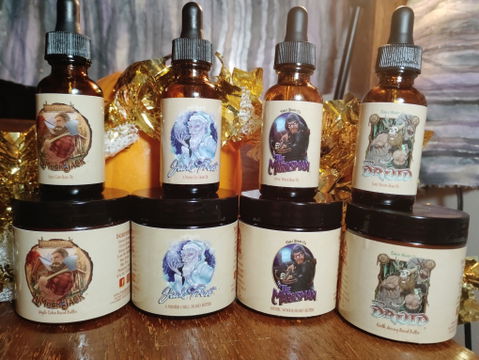
- The Djinn Beard Oil. Egyptian Cologne, Warm Sandalwood and Dragon's Blood. 1 oz, $18.99. My own blend, so forgive the bias: warm sandalwood with a resinous, spiced edge. This is the one for the incense-and-spice crowd.
- The Crusader Beard Oil. Ancient Citrus Musk, Lavender Soaked Sandalwood and Eucalyptus Spice. 1 oz, $18.99. The lavender pairing done cleaner and brighter. Good for the office.
- The Troll Beard Oil. Sandalwood Pipe, Refreshing Stream and Bright Spring Air. 1 oz, $18.99. Sandalwood on the fresh, outdoorsy side, for people who find warm woods too heavy.
- The Marksman Cologne. Crisp Pine, Warm Cedar, Fresh Sandalwood, Soft Mosses and Mystical Amber. 80 ml, $39.99. If you want a sandalwood cologne inside a forest of other woods, this is it. Note that the sandalwood is listed on his cologne, balm, wash and conditioner, while his beard oil is pine, cedar and amber.
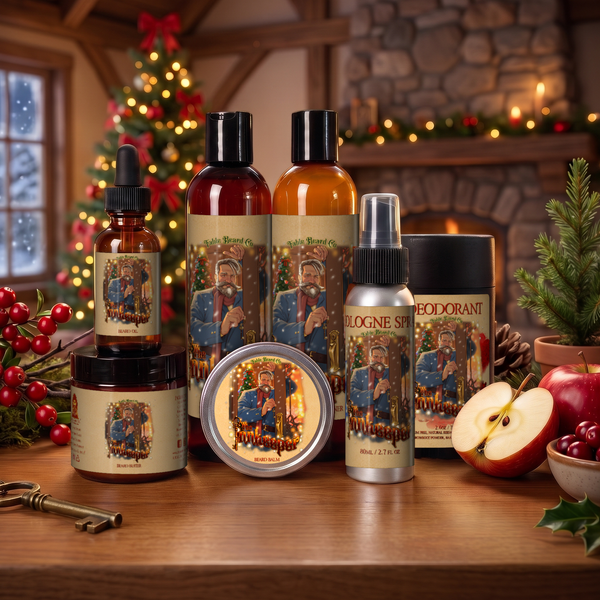
The Imagineer also carries Warm Sandalwood under roasted marshmallow and citrus, if your nose leans sweet. You can compare every scent in the beard oil collection, and the colognes live in the cologne collection.
One caution before you make your wish: sweet almond and argan come from tree nuts, so if you have a nut allergy, check with your doctor and patch test any new oil on your jaw first.
Not sure which scent is yours?
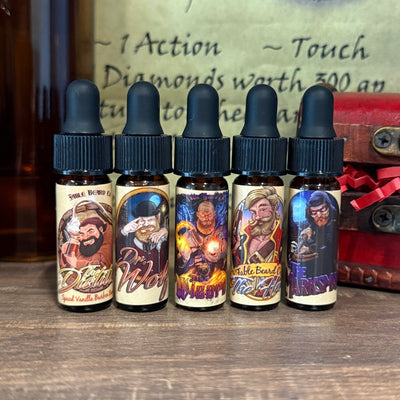
Even a djinn tests the goods before he trades. The sampler doesn't hold a sandalwood blend, but it's the easiest way to learn which scent families your nose loves before you commit. Try the Adventure Pack: five best-selling beard oil samples (The Hero, The Wizard, The Marksman, Dr. Wolf and The Distiller) for $29.99.
How to wear sandalwood
Sandalwood is quiet, so it rewards a light hand and a little patience. It works in any season, and because it doesn't shout, it's one of the safer picks for work.
- Give it time. Smell it again after an hour. The top notes burn off and the creamy wood comes forward.
- Oil first, cologne last. Work beard oil down to the skin, comb it through, then spray cologne on your neck or chest, not into the beard.
- Match or contrast. A sandalwood oil under a sandalwood cologne gives one deep scent. A citrus cologne over a sandalwood oil gives you fresh on top and warm underneath. Our guide to beard oil and cologne covers layering in detail.
FAQ
Does sandalwood smell like vanilla?
Not exactly. Both are creamy and warm, which is why they pair so well, but sandalwood is a wood with only a light sweetness. Vanilla is far sweeter and smells more like dessert.
Is sandalwood a masculine scent?
It shows up in a lot of men's colognes and beard oils, but perfumers use it just as often in fragrances for women and in unisex scents. Its soft, warm character works on anyone.
What's the difference between sandalwood and cedarwood?
Cedarwood is dry and clean, a lot like pencil shavings. Sandalwood is creamy, milky and softer, with a warm sweetness cedar doesn't have.
Why is real sandalwood so expensive?
The trees grow slowly, only the heartwood and roots carry much scent, and wild Indian sandalwood was overharvested for years. That scarcity is why most modern fragrances use synthetic sandalwood molecules, alone or blended with a little natural oil.
Is sandalwood a good scent for beard oil?
Yes. It's soft enough to wear under your nose all day and, as a base note, it lingers. Fable beard oils with sandalwood in the notes include The Djinn, The Crusader, The Troll and The Imagineer.
One last thing
As for the merchant, I bought his pencil anyway. A djinn respects a bold bargain. Then I let him lean in and smell my beard, and he went very quiet. "That," he said, "is sandalwood." Be careful what you wish for, friend. Now you'll never mistake a pencil for it again.
Your beard, your story.
— The Djinn