Alopecia Barbae: Bald Spots in Your Beard and What to Do
Dr. WolfThe ferryman came into my study at four in the afternoon, holding his shaving mirror at arm's length as if it had bitten him. "Doctor, I've ruined my beard." There it was on the left side of his jaw: a smooth, round bald spot about the size of a quarter. The skin looked perfectly normal. No cut, no rash. He'd found it that morning and spent the whole river crossing convinced his razor had slipped. It hadn't.
Here's the plain answer. Alopecia barbae is patchy hair loss in the beard caused by alopecia areata, an autoimmune condition in which your immune system attacks your own hair follicles. It usually shows up as round, smooth bald spots that appear over days or weeks on otherwise healthy skin. It isn't caused by shaving, it isn't contagious, and it isn't the same as a beard that has always grown in patchy. A dermatologist can confirm it and talk through treatment. Beard oil won't fix it, but smart grooming can make it far less noticeable.
- Alopecia barbae is alopecia areata in the beard. The immune system targets hair follicles and leaves round, smooth bald patches, often about the size of a coin.
- It's different from genetic patchiness. Genetic gaps have been there since your beard came in. These patches show up suddenly in a beard that used to fill in.
- Only a dermatologist can diagnose it and decide whether to treat it. A fungal infection and a few other conditions can look similar at first.
- Beard oil doesn't treat it. Gentle, unscented care and a smart trim help you live with it in the meantime.
What is alopecia barbae?
Alopecia areata is an autoimmune condition. For reasons nobody fully understands, immune cells gather around hair follicles and push them to stop making hair. In the beard, it gets its own name. Some men only get it on the face; others also get patches on the scalp or eyebrows.
The detail I underlined twice in my notes: the follicles usually aren't destroyed. They're suppressed, not scarred. That's why hair can grow back in the same spot, sometimes months later. It's also why the course is so hard to predict: one man gets a single patch that fills in for good, another gets new ones on and off for years.
And no, you didn't cause it. Shaving, trimming, beard oil, a dull razor: none of those creates an autoimmune bald spot.
Signs of a bald spot from alopecia barbae
Observation is my favorite part of any experiment. Here's what to look for.
- Round or oval smooth patches, often around the size of a quarter. They tend to sit along the jawline, chin or cheeks, and patches close together can merge.
- Normal-looking skin inside the patch. No scaling, no pus, usually no redness.
- Fast onset. A patch can appear over a few days to a few weeks.
- "Exclamation mark" hairs at the edges. These are short, broken hairs that are narrower at the base than at the tip.
- Tingling or a mild itch before the hair goes, in some people.
- White or gray regrowth. When hair comes back, it often arrives pale at first.
Beard alopecia or just a patchy beard?
Short version: patchy genetics are a map you were born with. Beard alopecia is a sudden change to the map.
| What you see | Likely culprit | What to do |
|---|---|---|
| Thin areas that have been there since your beard first came in, with soft, fuzzy edges | Genetics and beard maturity | Patience and a style that works with it |
| A sharp-edged, smooth, round patch that appeared suddenly in a beard that used to fill in | Possibly alopecia barbae | See a dermatologist |
| A red, scaly, swollen or crusty patch, sometimes with bumps or pus | Possibly a fungal infection or folliculitis | See a doctor; these need different treatment |
| Shedding or thinning across the whole beard | Many possible causes | Mention it to your doctor |
An autoimmune patch looks like someone took a coin-shaped eraser to your face. If general shedding is your worry rather than one neat circle, our guide to beard hair falling out covers the everyday causes.
What causes it?
Nobody can point to one cause. Genes play a part, and the condition is more common in people with relatives who have alopecia areata, and in people with other autoimmune or allergic conditions such as thyroid disease, vitiligo, eczema or asthma. Stress, illness and certain medications have been linked to flare-ups in people who are already prone, though the evidence is mixed.
By night I know a thing or two about hair changing fast. By day, I'll tell you stress alone doesn't explain it.
See a dermatologist first
Here's my one firm caution, and I'll only say it once. If you find a new bald spot in your beard, book a dermatologist. Fungal infections, folliculitis and rarer scarring types of hair loss can look alike at first, and they need very different handling. A dermatologist can often tell by looking closely and may order blood work to check things like thyroid function.
If it is the autoimmune kind, they'll walk you through options. Depending on how many patches you have and how fast they spread, a doctor may discuss steroid creams or injections into the patch, topical minoxidil, immunotherapy applied to the skin, or a newer class of prescription pills called JAK inhibitors. Some suggest watching and waiting, since small patches can regrow on their own. If and how to treat is a conversation for the exam room, not a forum thread.
Grooming a beard with bald spots
This is where I can help. Regrowth is slow when it happens, and you still have a face to take to work.
Pick a length that hides the patch
- Go shorter. Heavy stubble or a short, even beard makes a small patch much less obvious.
- Go longer around it. If the spot is small and low on the jaw, longer hair above it can be brushed down to cover it. A little balm keeps it there.
- Shave it all off. Completely valid. Shaving won't make the condition better or worse.
For specific shapes that work around gaps, see our guide to patchy beard styles.
Fillers and camouflage
Beard filler pencils and powders tint the skin so a patch blends in. They wash off and work best on small spots. Patch test first and keep them off irritated skin. Our beard filler guide shows how.
A gentle routine while it settles
- Wash gently. A mild, sulfate-free beard wash two or three times a week is plenty. Lukewarm water, not hot.
- Pat, don't rub. Press the towel against your beard instead of scrubbing it.
- Go unscented for now. Fragrance is a common irritant. The scientist in me says change one variable at a time.
- Oil the hair you have. A few drops of beard oil keep the surrounding hair soft and the skin underneath from getting tight and flaky.
- Leave the patch alone. Don't pluck the short hairs at the edge or rub garlic or onion juice into it because a video said so.
- Mind the sun. Skin that used to be covered by hair can burn. Put sunscreen on the patch on bright days.
Reactive skin in general? See beard care for sensitive skin.
What beard oil can and can't do here
Conclusion first, lab-book style: beard oil does not treat this condition. Not ours, not anyone's. It can't calm an immune response or switch a follicle back on. If a product promises to, keep your wallet closed.
What it does is ordinary and useful. It softens the hair you have so it covers better, and keeps the skin underneath comfortable. Our beard oils are made with castor, coconut, sweet almond, argan and jojoba oils. Here's what I'd keep on the shelf while you sort things out with your doctor:
- The Barkeep Beard Oil. 1 oz, $18.99, no added fragrance. My first pick. Sweet almond oil comes from a tree nut, so check with your doctor if you have a nut allergy.
- The Barkeep Beard Wash. 8 oz, $21.99, unscented and sulfate-free with aloe and five oils.
- Dr. Wolf Beard Balm. 2 oz tin, $23.99, fresh blueberries, warm tobacco and aged mahogany. For later, when your skin is calm and you want to train longer hair over a spot.
You can compare every scent in the beard oil collection, and the unscented and scented options side by side in beard wash.
Not sure which scent is yours?
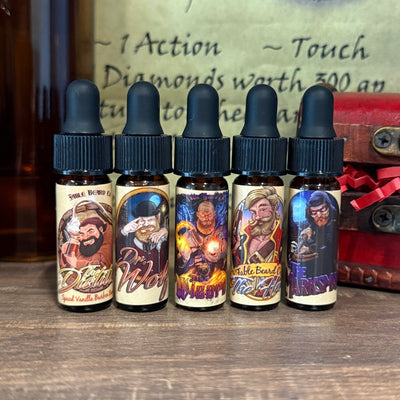
Once your skin has settled and you're ready to bring scent back, run a small experiment before you commit to a full bottle. Try the Adventure Pack: five best-selling beard oil samples (The Hero, The Wizard, The Marksman, Dr. Wolf and The Distiller) for $29.99.
FAQ
Does alopecia barbae go away on its own?
It can. Small patches often regrow without treatment, sometimes within months, but the course is unpredictable and new patches can appear later. A dermatologist can tell you whether to wait or treat.
Is alopecia barbae contagious?
No. It's an autoimmune condition, not an infection, so you can't catch it or pass it on through towels or razors. A fungal infection of the beard can look similar, which is one reason to get a proper diagnosis.
Can beard oil fix a bald spot in my beard?
No. Beard oil softens the hair you have and keeps the skin from drying out, but it doesn't treat alopecia barbae or grow hair in a bare patch. Use it for comfort and appearance, and leave treatment to a doctor.
Is beard alopecia caused by stress?
Stress may trigger a flare in people who are already prone, but it isn't the whole story. Genes and the immune system play a bigger role, and plenty of people get patches with no obvious stress at all.
Why is the hair in my bald spot growing back white?
Regrowth in these patches often comes in white or gray at first. In many people it gradually returns to its usual color, though not always.
Should I shave my beard off if I have alopecia barbae?
Only if you want to. Shaving doesn't make the condition better or worse. Some men prefer a clean shave or short stubble because it makes patches less obvious.
One last thing
The ferryman came back a month later. He'd seen the dermatologist, who confirmed it and gave him a plan. He'd trimmed to a short, even length, and the spot was something you'd only notice if you went looking. He held the mirror at a normal distance this time. Then he asked whether my blueberry oil was any good. I told him to let his skin settle first, then come smell it for himself.
Your beard, your story.
— Dr. Wolf