Beard Dandruff: Why It Happens and How to Get Rid of It
The WizardFrom the Wizard's journal, entry #1,337: A raven landed on my windowsill at midnight with a letter from Dr. Wolf, written in a hurry by the look of the ink. He'd spent three nights in the deep woods under a full moon, and when he came back to his clinic and pulled on his white coat, his patients kept staring at his chin. "Little white flakes, Wizard. Some of them greasy. A physician with dandruff in his beard. Advise." I answered before the raven finished its biscuit.
Here's what I told him. Beard dandruff (some folks call it beardruff) comes in two kinds. One is plain dry skin: small, white, dry flakes that brush away and get better with gentler washing and a little oil on the skin. The other is seborrheic dermatitis, the same thing behind scalp dandruff: greasier, yellowish flakes, often with red or itchy patches, that usually need an over-the-counter dandruff shampoo with an antifungal ingredient. Figure out which one you've got, then give the right routine two full weeks.
- Small, dry, white flakes that brush off easily usually mean dry skin. Greasy, yellowish flakes with redness usually point to seborrheic dermatitis.
- For both kinds, the basics are the same: a gentle beard wash, lukewarm water, a soft daily brushing and a little oil worked into the skin.
- For the greasy kind, the American Academy of Dermatology suggests a dandruff shampoo with 2% zinc pyrithione, 1% ketoconazole or 1% selenium sulfide, used on the beard at least once a week.
- No better after two to three weeks, or you've got pain, broken skin or breakouts? See a dermatologist.
What causes beard dandruff?
Skin sheds all the time. Dandruff is what you see when that shedding speeds up and a beard traps the dead skin instead of letting it rinse away. Two different problems cause most of it.
- Dry skin. Hot showers, bar soap or regular shampoo on your face, cold air and furnace heat all strip oil from the skin. The beard makes it worse, because the hair pulls oil up and away from the skin it grows out of. Dry skin cracks into small, light flakes.
- Seborrheic dermatitis. The medical name for ordinary dandruff, and very common. A yeast called Malassezia lives on everyone's skin and feeds on skin oil. In some people that irritates the skin, which turns over faster and builds up greasy scale on oily spots: scalp, eyebrows, the sides of the nose and the beard.
Plenty of guys have a bit of both, and the two need slightly different fixes.
Dry skin or seborrheic dermatitis? How to tell them apart
Look closely in good light, ideally right after you brush your beard over a dark sink or shirt.
| What you notice | Dry-skin flakes | Seborrheic dermatitis |
|---|---|---|
| Flakes | Small, white, dry, powdery | Larger, yellowish or off-white, greasy or waxy |
| How they come off | Brush away easily | Stick to the skin or the base of the hairs |
| The skin underneath | Tight, rough, maybe a little pink from scratching | Red or darker patches, often itchy, sometimes oily |
| Where else | Hands and shins might be dry too | Scalp, eyebrows, sides of the nose, behind the ears |
| What usually helps | Gentler washing plus oil on the skin | A medicated dandruff shampoo plus the same gentle routine |
Mostly left column? Use the routine below as written. Mostly right column? Same routine, but swap in a dandruff shampoo on wash days. Not sure? Start with the routine and let two weeks tell you.
A 2-week routine to get rid of beard dandruff
The part people skip is doing it every day long enough to judge it. Skin takes a couple of weeks to settle, so don't swap products on day four.
- Brush every morning, before you wash. Use a soft beard brush and short, gentle strokes from the skin outward. It lifts loose flakes and spreads your own oil along the hair. If your skin is pink afterward, you're scrubbing too hard.
- Wash with a gentle beard wash 2 to 3 times a week. Skip the bar soap and the body wash. Work a small amount down to the skin with your fingertips, give it 30 seconds, then rinse well. Leftover soap trapped in a beard can itch and flake on its own. Our beard washes use a mild coconut-derived cleanser.
- Rinse with lukewarm water, every day. On non-wash days, just rinse. Hot water strips oil almost as fast as soap.
- Pat dry. Press a towel into your beard instead of rubbing it like you're polishing a boot.
- Oil the skin, not just the hair. While your beard is still a little damp, warm 3 to 5 drops of beard oil between your palms (a few more for a long beard), then push your fingertips through to the skin and work it in there first. Pull what's left out through the hair and finish with a comb.
- Hands off. Picking at flakes peels off healthy skin and leaves sore spots that flake more.
Here's how the two weeks usually go:
| Days | What you do | What to look for |
|---|---|---|
| 1 to 3 | Brush, rinse lukewarm, oil the skin. First wash day. | Itch may calm before the flakes do |
| 4 to 7 | Same routine, second wash day | Fewer flakes on your shirt by the end of the day |
| 8 to 14 | Same routine, 2 to 3 wash days a week | Dry-skin flakes mostly gone. Greasy flakes still there? Time for a medicated shampoo. |
If it's mostly dry skin, our guide to beard oil for dry skin covers drop counts by beard length and adding butter at night.
When to try a medicated beard dandruff shampoo
Greasy, yellowish flakes or red, itchy patches usually won't clear with gentle washing alone. That's seborrheic dermatitis, and the fix is an anti-dandruff ingredient that goes after the yeast.
The American Academy of Dermatology's guide to common beard problems recommends shampooing your beard and scalp at least once a week with a dandruff shampoo containing one of these:
- 2% zinc pyrithione
- 1% ketoconazole
- 1% selenium sulfide
All three are sold over the counter, so you don't need a special "beard" version. Lather it down to the skin, leave it on for a few minutes (check the label), then rinse thoroughly. The AAD also mentions over-the-counter 1% hydrocortisone for the rash itself. Ask a pharmacist or doctor before putting a steroid on your face.
Medicated shampoos can dry out facial skin, so keep the rest of the routine going and use your regular beard wash on the other wash days. Flakes often come back if you stop completely, so once things clear up, a once-a-week medicated wash is a common way to keep them in check.
One honest caveat about oil. Malassezia feeds on skin oils, so with the greasy kind, more oil is not better. Stick to a few drops worked into the skin, and if the greasy flakes get worse, cut back and let the shampoo do the work. Beard oil is there to keep the skin and hair comfortable, not to treat seborrheic dermatitis.
Mustache dandruff
Mustache dandruff is the same two problems in a more noticeable spot. The skin above your lip sits next to the creases beside your nose, a favorite spot for seborrheic dermatitis. Coffee and constant touching don't help.
Treat it like the rest of the beard: a soft brush, a gentle wash, lukewarm water and a drop or two of oil worked into the skin. If you wax your mustache, wash the wax out fully at night, because old wax holds onto flakes. (Our mustache waxing guide covers that.) Keep medicated shampoo out of your eyes and nostrils.
What to use: our picks for a flaky beard
These are washes and oils for the everyday routine, not dandruff treatments, and they don't replace a medicated shampoo when you need one.
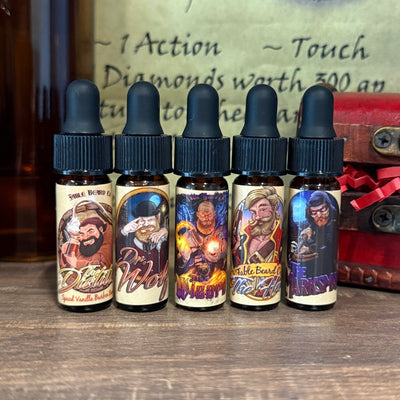
Dr. Wolf Beard Wash ($21.99, 8 oz) cleans with decyl glucoside, a gentle coconut-derived cleanser, plus aloe and a blend of castor, sweet almond, coconut, jojoba and argan oils. Scent: fresh blueberries, warm tobacco and aged mahogany. Pair it with Dr. Wolf Beard Oil ($18.99, 1 oz) for the oil step. The rest is in the Dr. Wolf collection.
The Barkeep Beard Wash ($21.99, 8 oz) is the same formula with no added fragrance, and The Barkeep Beard Oil ($18.99) matches it. If your skin is red and irritated, start here and rule fragrance out.
Patch-test on your jaw for a day first, and stop anything that makes your skin angrier. Sweet almond oil comes from a tree nut, so check with your doctor if you have a nut allergy.
When to see a dermatologist
Most cases clear up with the routine and, if needed, a drugstore dandruff shampoo. Book a dermatologist if:
- You see no improvement after two to three weeks of a medicated shampoo used as directed.
- The skin is painful, cracked, bleeding or weeping.
- You get acne-like bumps, pus or crusting under the beard, which can mean an infection.
- The red, scaly patches are spreading or showing up in new places.
A dermatologist can confirm what it is (psoriasis and a few other conditions can look similar) and prescribe stronger options if over-the-counter ones aren't enough.
FAQ
How do I get rid of beard dandruff fast?
Brush your beard gently every morning, wash it with a gentle beard wash 2 to 3 times a week, rinse with lukewarm water and work a few drops of oil into the skin. If the flakes are greasy or yellowish, use an over-the-counter dandruff shampoo with zinc pyrithione, ketoconazole or selenium sulfide on wash days. Expect real change in one to two weeks, not overnight.
Is beard dandruff the same as dry skin?
Not always. Dry skin gives you small, white flakes that brush off easily. Greasy, yellowish flakes with red patches are more likely seborrheic dermatitis, which usually needs a medicated dandruff shampoo.
Can I use Head and Shoulders on my beard?
Yes. Any dandruff shampoo with an active ingredient like zinc pyrithione can be used on a beard. It can dry out facial skin, so rinse well, follow with a little oil on the skin, and use your regular beard wash on the other wash days.
Does beard oil help with beard dandruff?
It helps with the dry-skin kind, because it keeps the skin under your beard from drying out and cracking. It isn't a treatment for seborrheic dermatitis, so with greasy flakes use only a few drops and lean on a medicated shampoo.
Why do I get dandruff in my beard but not on my head?
Facial skin often gets harsher treatment than your scalp: bar soap, hot water and no conditioner. A beard also traps flakes that would rinse away on bare skin. If you already use a dandruff shampoo on your hair, try using it on your beard too.
One last thing
The raven came back two weeks later with a much shorter letter. Dr. Wolf had found his flakes were the greasy kind, picked up a ketoconazole shampoo from his own apothecary, and kept his beard wash for the other days. "Clean coat. Patients have stopped staring," it read. "Will not admit you were right." Underneath, in smaller letters: "You were right."
Your beard, your story.
— The Wizard