Ingrown Beard Hairs: How to Prevent Them
The WizardThe deck of Rum Runner's sloop rolled a good ten degrees each way, and there he stood at the rail with a hand mirror, a cheap razor and no lather, scraping his neck upward in quick strokes. By the time we dropped anchor his throat looked like a strawberry. "Every voyage," he said, rubbing at a row of red bumps under his jaw. "The beard's fine. It's the neck that mutinies."
That neck is where most ingrown beard hairs start. An ingrown hair happens when a freshly cut hair curls back and grows into the skin instead of out of it, and it's most likely when you shave close, shave against the grain or let dead skin clog the opening. To prevent them, trim your neckline with a trimmer instead of shaving it bare, shave with the grain when you do use a razor, exfoliate 2 to 3 times a week, and keep the skin soft afterward. If you already have one, leave it alone, use warm compresses and give it time.
- Ingrown beard hairs show up where you shave: the neckline and cheek lines. Curly or coarse hair, close shaves against the grain and dead skin make them far more likely.
- The single biggest fix is trimming your neck with a trimmer instead of shaving it bare, so the hair never gets cut below the skin.
- If you shave, use warm water, real lather, a sharp blade and short strokes with the grain. Exfoliate 2 to 3 times a week and oil the skin after.
- Got one already? Stop shaving that spot, use a warm compress and don't dig. See a dermatologist if bumps keep coming, hurt or fill with pus.
Why ingrown beard hairs happen
A beard hair that's allowed to grow long rarely turns inward. The trouble starts when you cut it right at or below the skin. The cut end is sharp, and as it grows back it can curl around and pierce the skin next to it, or never make it out of the follicle at all. Your body treats it like a splinter, and you get a red, sore bump. When it happens across a whole shaved area, it's usually called razor bumps. The medical name is pseudofolliculitis barbae, and it's the same problem at a bigger scale.
A few things stack the odds against you:
- Curly or coarse hair. Hair that already wants to curl has a head start on curling back in. The American Academy of Dermatology notes razor bumps are especially common in men with darker skin tones and coarse, curly hair, and that neck hair often grows in several directions at once.
- Shaving too close, against the grain. Going against the grain cuts the hair below skin level. It feels smoother for a day, then the hair has to find its way back out.
- Dead skin. A layer of dead skin cells can cap the opening of the follicle so the regrowing hair has nowhere to go but sideways.
- Tight collars. A stiff shirt collar, a tie or a hoodie zipped to the chin rubs freshly shaved neck skin all day and pushes short hairs back down.
Notice that the full beard itself is almost never the problem. Ingrown facial hair lives on the edges you shave: under the jaw, down the neck and along the cheek line.
How to prevent ingrown beard hairs
You don't need a 10-step routine. You need to stop cutting hair below the skin and keep that skin clear and soft. In order of how much difference they make:
- Trim instead of shave where you can. A trimmer with no guard leaves a tiny bit of stubble above the skin, which is exactly what you want. For most guys with a beard, a trimmed neckline looks just as clean from three feet away. Our beard neckline guide shows where to put the line so you're not cleaning up more neck than you need to.
- If you shave, shave with the grain. Run your fingers over your neck to feel which way the hair lies. On the neck it often grows down, sideways or in a swirl. Follow it with short, light strokes, and don't go over the same patch more than twice.
- Use warm water and real lather. Shave at the end of a hot shower or hold a warm, wet washcloth on your neck for a few minutes first. Then lather up. Never dry shave, which is what Rum Runner was doing at the rail.
- Keep the blade sharp. A dull blade tugs and drags, and that drag makes bumps worse. The AAD suggests replacing a single-blade razor after 5 to 7 shaves.
- Exfoliate 2 to 3 times a week. A washcloth or a soft brush rubbed in small circles with your face wash is plenty. You're clearing dead skin off the follicle openings, not sanding your neck. Skip it on any day your skin is already raw.
- Oil after. Rinse with cool water, pat dry and work a couple of drops of beard oil into the shaved skin and the beard above it. Soft skin and soft hair make the next shave easier.
One more lever, if you're willing: leave the neck alone for a while. The AAD says that growing a beard out, if that's an option, can get rid of razor bumps for good, with fewer bumps within about a month. Even letting the neck go a few days between cleanups helps.
The do and don't list
| Do | Don't |
|---|---|
| Trim the neckline with a trimmer | Shave the neck bare every day out of habit |
| Shave with the grain in short strokes | Go against the grain to chase a baby-smooth neck |
| Soften with warm water and lather first | Dry shave, even "just a quick pass" |
| Swap blades every 5 to 7 shaves | Keep using a razor that tugs |
| Exfoliate gently 2 to 3 times a week | Scrub hard or exfoliate irritated skin |
| Oil the skin after you shave | Splash on an aftershave that burns |
| Loosen your collar after a fresh shave | Pick, squeeze or dig at a bump |
What to do if you already have an ingrown hair
First, put the razor down for that spot. Shaving over a bump slices the top off and starts the cycle again. Trim around it or leave the area for a few days.
Then try this:
- Warm compress. Hold a clean, warm, wet washcloth on it for a few minutes, two or three times a day. Warmth softens the skin and can help the hair work its way up.
- Gentle cleaning. Wash the area with a mild cleanser and keep exfoliating lightly around it, not hard on top of it.
- Only if the hair has surfaced on its own. If you can clearly see a loop of hair sitting above the skin, you can gently lift the free end out with clean tweezers so it points outward. Don't pull the hair out completely; the AAD specifically warns against plucking hairs in a razor bump. If the hair isn't already visible, leave it. Never use a needle or pin to dig for it.
- Know when to stop. If it hurts more when you touch it, bleeds, or you've been at it longer than a few seconds, stop and go back to compresses.
Most mild ones settle down on their own once you stop shaving over them. See a dermatologist if the bump is getting bigger, very painful or filled with pus, if redness is spreading, or if you keep getting bumps even after changing how you shave. The AAD warns that men who keep getting razor bumps can end up with dark marks, deep grooves or raised scars, and a dermatologist has treatments that a home routine doesn't.
Razor bumps on the beard line: a routine that works
Here's what we'd tell anyone with a beard who keeps getting bumps along the neck:
- Every day: wash your face, then 3 to 5 drops of beard oil worked into the beard and down to the skin, including the edge of the neckline.
- 2 to 3 times a week: exfoliate the neck in the shower with a washcloth or soft brush, and wash the beard with a real beard wash instead of bar soap, which can leave the skin tight and flaky.
- Every 3 to 7 days: clean up the neckline with a trimmer. Pull out the razor only for days that call for it, and follow the shaving steps above when you do.
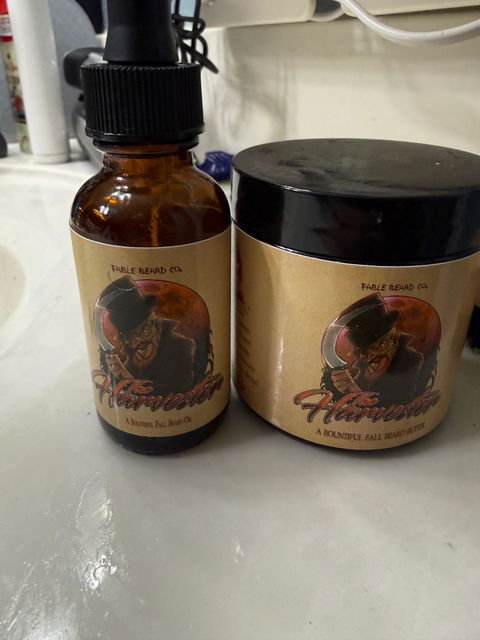
For oil, Rum Runner beard oil is the one Rum Runner now keeps in his sea chest: bay rum spices, Tahitian lime and fresh coconut in a 1 oz bottle, made with castor, coconut, sweet almond, argan and jojoba oils. If fragrance tends to sting a freshly shaved neck, or your skin is touchy in general, The Barkeep is the same carrier oils with no added fragrance. Either way, beard oil won't stop a hair from curling. What it does is keep the skin and hair soft so the rest of the routine is easier on you. If your neck is also dry and flaky, our guide to beard oil for dry skin goes deeper, and if the whole beard itches, start with our beard itch guide.
FAQ
Can you get ingrown hairs in a full beard?
It's possible but uncommon. Long hair has already grown out of the follicle, so it has little reason to curl back in. Most ingrown hairs show up on the parts you shave or trim very short, like the neck and cheek lines.
Are razor bumps and ingrown hairs the same thing?
Pretty much. Razor bumps, or pseudofolliculitis barbae, are the red bumps that form when shaved hairs grow back into the skin. One ingrown hair is a single bump. Razor bumps are a whole patch of them.
Should I pop or dig out an ingrown beard hair?
No. Squeezing or digging pushes bacteria in and can leave a scar. Use warm compresses, and only lift the end with clean tweezers if the hair has already surfaced on its own. If it's painful, swollen or full of pus, see a doctor.
Is it better to trim or shave my neck?
If you get ingrown hairs, trim. A trimmer leaves the hair just above the skin, so it grows straight out instead of curling back in. Save the razor for special occasions and shave with the grain when you do.
Does beard oil help with ingrown hairs?
It won't stop a hair from curling, but it keeps the skin and hair soft, which makes shaving and exfoliating gentler. Use a few drops after you shave, and pick an unscented oil like The Barkeep if fragrance stings fresh skin.
One last thing
Rum Runner still keeps that razor aboard, but these days it only comes out in calm water, with hot water from the galley and a proper lather. The rest of the time his neckline gets a trimmer and a few drops of oil, and the strawberry is long gone. The sea's rough enough. Your neck doesn't need to be.
Your beard, your story.
— The Wizard