Beard Itch: Why It Happens and How to Stop It
The WizardSomeone knocked on my door a little after 2 a.m., which is about when you'd expect Dr. Slumber to send for help. He's the one who walks the quiet hours and gets everyone else in Boron to sleep. His messenger handed me a note, short and badly smudged: "Three weeks into a new beard. Cannot stop scratching. Have not slept since Tuesday. Physician, heal thyself, they say. Please advise." I lit a candle and wrote back.
Here's what I told him. Beard itch is one of the most common complaints of a new beard, and it usually has a boring cause. In the first few weeks, every hair has a sharp, freshly cut tip that pokes back at the skin as it grows. On top of that, the skin under your beard dries out because the hair pulls oil away from it. Wash gently, work a few drops of beard oil down to the skin, comb it through and wait it out. Most new-beard itch fades by week 4 to 6. If it doesn't, or you see pus, crusting or a spreading rash, that's a doctor's job.
- Most of the itch comes from new hairs with sharp, freshly cut tips (worst in weeks 1 to 4) or from dry skin under the beard.
- Product buildup, harsh soap, ingrown hairs and yeast-related flaking (seborrheic dermatitis) are the other usual suspects.
- The routine that helps most: gentle beard wash, pat dry, a few drops of beard oil worked into the skin, then a comb.
- Don't shave at week 2 just because it itches. The itch usually eases once the hairs get long enough to curve and soften.
- Red bumps with pus, a spreading rash, crusting or itch that lasts past a few weeks of good care means it's time to see a doctor.
Why beard itch happens
There isn't one cause. There are about six, and they like to pile on top of each other.
Sharp new growth (weeks 1 to 4). A razor slices each hair off and leaves a stiff, sharp-edged tip instead of the soft, tapered end hair has naturally. As those hairs grow back, the tips rub against the skin and the edge of the follicle. It eases once the hairs are long enough to bend and lie flat.
Dry skin underneath. Your skin makes a set amount of oil, and a beard wicks a lot of it away. Cold weather, indoor heat and hot showers make it worse. We cover this one in detail in our guide to beard oil for dry skin.
Product buildup. Balm, food, sweat and dead skin all collect in a beard. Add product daily without washing it out and the skin underneath gets cranky.
Harsh soap. Bar soap and body wash are made for arms and backs, not the thin skin on your face. They strip oil fast and leave the skin raw.
Ingrown hairs. A hair curls back into the skin instead of out of it, and you get a red, itchy bump. Curly and coarse hair is more prone to this, especially along a freshly shaved neckline.
Yeast, fungus and infection. Seborrheic dermatitis is a common, dandruff-like condition linked to a yeast that lives on everyone's skin. It shows up as greasy yellowish flakes and red patches. Less often, bacteria like staph or a fungal infection of the follicles cause painful bumps. According to Cleveland Clinic's guide to itchy beards, which draws on dermatologist Dr. Alok Vij, these can spread from unclean razors and sometimes need prescription treatment. If your flakes look more like snow than grease, our beard dandruff guide walks through the difference.
Beard itch causes and fixes at a glance
| Cause | What it feels or looks like | What to do | See a doctor if |
|---|---|---|---|
| New growth | Prickly, all-over itch in weeks 1 to 4, no rash | Oil to the skin daily, comb, don't shave it off | It's still bad after week 6 |
| Dry skin | Tight skin, small white flakes, worse in winter | Gentle wash, lukewarm water, beard oil after every shower | Skin cracks or bleeds |
| Product buildup | Heavy, greasy beard, itch near the skin | Wash 3 to 4 times a week, use less balm or butter | Bumps form where product sits |
| Harsh soap | Itch and redness right after showering | Switch to a beard wash and skip the bar soap | Redness lasts days after switching |
| Ingrown hairs | Single red bumps, often on the neck | Warm compress, comb in the direction of growth, leave them alone | Bumps fill with pus or keep coming back |
| Seborrheic dermatitis | Greasy yellowish flakes, red patches, comes and goes | Over-the-counter anti-dandruff wash a few times a week | It doesn't improve in 2 to 4 weeks |
| Infection | Painful, pus-filled bumps, crusting, spreading redness | Stop shaving that area and keep it clean | Right away |
Beard itch when growing: a week-by-week survival guide
If you're growing a new beard and it itches, you're not doing anything wrong. Here's roughly what to expect.
Days 1 to 3. Stubble, rough but not itchy yet. Start the habit now with one or two drops of oil at night.
Days 4 to 14. This is the bad stretch. The hairs are long enough to poke but too short to bend, so they jab back at the skin all day. Don't reach for the razor. Use 2 to 4 drops of oil twice a day, morning and before bed, and keep your hands off it.
Weeks 3 to 4. The hairs start to curve and lie down, so the jabbing eases. Dry skin often takes over as the main cause here, especially in cold weather. Keep the oil going and add a comb.
Weeks 5 to 8. For most guys the new-beard itch is gone or close to it. If you're still scratching, look at the table above. It's probably dry skin, buildup or your soap, not the beard itself.
Month 3 and on. A longer beard can start itching again for a new reason: it's harder to get oil and water down to the skin.
A simple routine for beard itch relief
This is the routine I gave Dr. Slumber.
- Wash 3 to 4 times a week with a beard wash. Use lukewarm water, not hot. A gentle wash from our beard wash collection cleans out buildup without stripping the skin the way bar soap does.
- Pat dry. Leave the beard a little damp.
- Oil the skin, not just the hair. Rub 3 to 5 drops between your palms for a short beard, more for a longer one, and push your fingertips down to the skin first. That's where the itch lives. Then pull what's left out to the ends.
- Comb or brush. It spreads the oil, lifts dead skin and trains the hairs to lie in one direction, which helps with ingrowns.
- Add a bedtime dose if nights are the worst. One or two drops before bed keeps the skin from drying out overnight, and a clean pillowcase every few days helps more than you'd think.
Want the full picture of what the oil is actually doing in step 3? Our guide on what beard oil does covers it.
Choosing a beard oil for an itchy beard
Any decent beard oil for itchy beard skin does the same basic job: it softens the hair so it stops poking and keeps the skin from drying out. The difference between bottles is mostly scent, and whether you want scent at all on irritated skin.
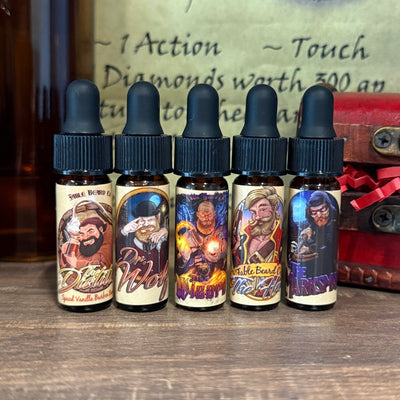
For Dr. Slumber, the answer was obvious. Dr. Slumber beard oil is built for the end of the day, with sweet orange and lemon peel up top, fresh-cut lavender in the middle and orange flower with vanilla underneath. The oil itself is castor, coconut, sweet almond, argan and jojoba with an IFRA-compliant fragrance oil, in a 1 oz bottle for $18.99. The rest of the Dr. Slumber collection carries the same scent into balm and butter.
If your skin is already red and touchy, start with The Barkeep instead. It's the same five carrier oils with no added fragrance, also 1 oz for $18.99, and it won't argue with your cologne. Whichever you pick, try a drop on your jaw first and wait a day. Sweet almond is a tree nut oil, so check with your doctor if you have a nut allergy.
What not to do
- Don't scratch. Nails break the skin, and broken skin is how an itch turns into an infected bump.
- Don't shave at week 2. It's relief for a day, then a fresh crop of sharp tips starts the itchy stretch over.
- Don't use hot water or bar soap on your face. Both strip the oil your skin is already short on.
- Don't share razors or trimmers, and clean your own. Dirty blades are one of the ways bacteria and fungus get into beard follicles.
When to see a doctor
Most beard itch is a care problem, not a medical one. These signs mean it's time to book a doctor or dermatologist:
- Painful red bumps, especially ones filled with pus
- Crusting, oozing or a rash that keeps spreading
- Round patches where the beard hair is falling out
- Greasy, yellowish flakes and redness that come back no matter what you wash with
- Fever or worsening swelling
- Itch that hasn't improved after 3 to 4 weeks of a gentle routine
These can point to folliculitis, a fungal infection or seborrheic dermatitis, which often need a medicated wash, cream or prescription. Beard oil can keep the skin comfortable while you sort it out, but it isn't a treatment for any of them.
FAQ
How long does beard itch last?
For a new beard, the worst of it usually runs from about day 4 to week 3 and fades by week 4 to 6 as the hairs get longer and softer. If you're past that and still itching, the cause is more likely dry skin, buildup or a skin condition than new growth.
Does beard oil help an itchy beard?
It helps when the itch comes from dry skin or stiff new hairs, which is most of the time. The key is getting the oil down to the skin, not just the ends. It won't fix an infection or a fungal problem, and those need a doctor.
Should I shave if my beard itches?
Not if you actually want a beard. Shaving at week 2 resets the clock and gives you a fresh crop of sharp tips, so you'll be back to the itchiest stage in a few days. Give it until at least week 4 before you decide.
Why does my beard itch at night?
You're not busy, so you notice it more, and indoor heat dries the skin out overnight. A small dose of beard oil before bed and a clean pillowcase both help. If it keeps you awake for weeks, get it checked.
Can beard itch be a sign of something serious?
Usually it isn't. But itch with painful red bumps, pus, crusting, patches of hair falling out or a rash that keeps spreading can point to an infection or a skin condition like seborrheic dermatitis, and those are worth a doctor's visit.
One last thing
His messenger came back four nights later with a much neater note. Dr. Slumber had kept the razor in the drawer, oiled the skin before bed and stopped scratching (mostly). "Slept until dawn," he wrote. "First time in a week. Don't tell my patients I needed help." Your secret's safe, Doctor. Mostly.
Your beard, your story.
— The Wizard