Argan Oil for Your Beard: Shine, Softness and What to Expect
The DjinnThree rubs on the lamp, and out I came in a curl of blue smoke, blinking at the noon sun over an oasis I hadn't seen in four hundred years. The traveler holding the lamp had sand in his eyebrows and a beard like a dry thornbush. He didn't even say hello. "First wish," he said. "A thicker beard." I sighed, as I always do at this part. Then I reached into my sash, handed him a small bottle of argan oil and told him the truth.
Argan oil for beard care is worth every drop, just not for the reason a lot of labels hint at. Pressed from the kernels of the Moroccan argan tree, it's a light, fast-absorbing oil that softens coarse beard hair, tames frizz, adds a healthy shine and helps keep the skin underneath from drying out. It cannot grow a beard or thicken one. So the traveler's first wish was denied, and his next two were granted on the spot. That's exactly why we put argan in our beard oils, alongside jojoba, castor, coconut and sweet almond oil.
- Argan oil is pressed from the kernels of the argan tree, which grows in southwestern Morocco. It's light, absorbs fast and is rich in oleic and linoleic fatty acids plus vitamin E.
- Its real talents are softness and shine: it smooths wiry, frizzy beard hair and helps keep the skin underneath from getting tight and flaky.
- It does not grow hair. No oil can create new follicles or fill a patch.
- Pure argan is fine on a short beard. Longer, coarser beards usually do better with a blend, like our beard oils The Djinn and The Barkeep, which pair argan with jojoba, castor, coconut and sweet almond oil.
What argan oil is, and where it comes from
The argan tree is a thorny, stubborn thing that grows in the dry southwest of Morocco, where very little else bothers to. I respect it. Inside each fruit is a hard nut, and inside that nut are one to three small kernels. Press those kernels and you get argan oil.
There are two kinds, and it matters which one ends up on your face. Culinary argan is pressed from roasted kernels and smells toasty and nutty, like something you'd drizzle on warm bread. Cosmetic argan comes from unroasted kernels, smells faint and a little earthy, and is the one you want for your beard. If a bottle of "argan oil" smells like a bakery, it was probably meant for dinner.
You'll also see "Moroccan oil" on hair products. That usually means argan, but some hair serums sold under that kind of name are mostly silicones with a splash of argan far down the ingredient list. Read the label before you pay argan prices.
Argan oil beard benefits: the two wishes it grants
Wish two: a softer beard. Beard hair is coarser than the hair on your head, and it dries out because your skin can't make enough oil to cover all that length. Argan is mostly oleic and linoleic fatty acids, the same kinds of fats your skin leans on to hold in moisture. It sinks into the hair instead of sitting on top like cooking oil, so wiry whiskers lie down and your comb stops snagging halfway through.
Wish three: shine. A dry beard looks dull, a bit like old straw. A few drops of argan smooth the outside of each hair so it catches the light. You get a healthy sheen, not an oil slick. This is where argan earns its place over lighter oils like jojoba, which are better at the skin than at the hair.
A bonus, because I'm feeling generous: the skin. Argan also helps keep the skin under your beard from getting tight and flaky. That dryness is behind a lot of beard itch and those white flakes that show up on a black shirt.
Is argan oil good for beard growth?
No. This is the wish I refuse every single time, so I'll say it plainly. Argan oil doesn't create follicles, doesn't change your genetics and won't fill a patchy cheek. Some blogs cite a small study where men ate argan oil, then leap to "grows your beard." Eating it and rubbing it on your chin are different things, and neither has been shown to thicken a beard.
What argan can do is make the beard you have look better. Soft, smooth hair lies in one direction and reflects light, so it reads as fuller than a dry, frizzy beard of the same density. And a comfortable face makes it much easier to survive the itchy, scraggly weeks of the awkward stage without reaching for the razor. If you want to know what's coming month by month, The Grower lays it out in the stages of beard growth.
Argan, jojoba and castor: which oil does what
People treat these three like rivals. They aren't. Each one is good at a different job.
| Oil | How it feels | Best at | Weak spot |
|---|---|---|---|
| Argan | Light to medium, dries down quickly | Softness, shine and smoothing frizzy ends | Pricier per ounce, and it comes from a tree nut |
| Jojoba | Light and almost dry | The skin under the beard, with no greasy feel | A bit light on long or coarse beards |
| Castor | Thick and tacky | Body, and helping a blend cling to the hair | Too sticky on its own for most guys |
Put them together and you cover the hair, the skin and staying power in one bottle. That's the thinking behind our beard oils, which blend all three. For the full story on the other two, read jojoba oil for your beard and castor oil for beards.
Pure argan oil or an argan beard oil?
Pure argan oil for beard care works fine. A short beard or stubble is happy with a small bottle of the straight stuff. A few catches before you choose:
- Price. Real cosmetic argan costs more per ounce than most carrier oils, and suspiciously cheap "100% argan" is sometimes cut with something else.
- Weight. On its own it can feel too light for a long, coarse beard in dry winter air. A blend with castor holds on longer.
- Scent. Pure argan smells faintly earthy, then like nothing. That's fine until you want your beard to smell like something.
If you go pure, buy cold-pressed cosmetic argan in a dark glass bottle and keep it off the sunny windowsill and out of a hot truck. Like any plant oil, it goes stale eventually. If it smells sour, toss it.
My picks: argan in a bottle
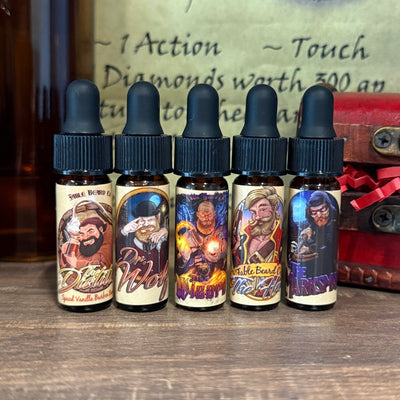
Naturally, I'll start with my own. The Djinn beard oil blends argan with castor, jojoba, coconut and sweet almond oil and adds my scent: Egyptian cologne, warm sandalwood and dragon's blood. It smells like a spice market at dusk, lanterns lit, resin smoking somewhere down the row of stalls. It's a 1 oz bottle for $18.99. If you want the same scent with more hold for styling, there's The Djinn beard balm too.
If you have a sensitive nose, a partner who isn't fond of fragrance or a cologne you already wear every day, The Barkeep is the honest answer, even from me. It's the same five-oil base (argan, castor, jojoba, coconut and sweet almond) with no added fragrance. The Barkeep makes his own case in his guide to unscented beard oil.
How to use argan oil for beard care
Pure or blended, the routine is the same:
- Go after a shower. Towel-dry until your beard is damp, not dripping. Warm skin and clean hair take oil best.
- Count your drops. About 2 to 4 for stubble or a short beard, 4 to 6 for medium and 7 to 10 for a long one. You can always add a drop later.
- Warm it up. Rub the oil between your palms for a few seconds.
- Skin first, then hair. Push your fingertips down to the skin and work it in, then pull it out through the hair. Give the ends a little extra.
- Comb it through. A comb spreads the oil evenly and trains the hair to lie flat, which is half the shine.
Once a day is plenty for most beards. In a desert-dry climate or a heated house in January, add a smaller dose at night. If your beard looks greasy by lunch, drop a drop or two. Growing it out? Oil right after a trim keeps freshly cut ends from feeling scratchy, and The Marksman covers the cutting side in how to trim a beard while growing it out.
One caution, and I'll only say it once. Argan comes from the kernel of a tree nut. If you have a nut allergy, check with your doctor before using it. That goes double for blends like ours, which also include sweet almond and coconut oil. Everyone else should still put a drop on the jaw and wait a day the first time. If your skin turns red or itchy, stop, and if irritation hangs around, see a dermatologist.
FAQ
Is argan oil good for your beard?
Yes. It softens coarse hair, smooths frizz and adds shine, and it helps keep the skin underneath from drying out. It absorbs quickly, so a sensible amount won't leave your beard greasy.
Does argan oil make your beard grow?
No. No oil can create new hair follicles or change your genetics. Argan can make the beard you already have softer and shinier, which often makes it look a little fuller.
Can I use pure argan oil on my beard?
You can. Pick cold-pressed cosmetic argan, not the roasted culinary kind, and start with 2 to 4 drops. Longer or coarser beards often feel better with a blend that adds a heavier oil like castor.
Is argan or jojoba oil better for a beard?
They do different jobs. Argan is better at softness and shine on the hair itself, and jojoba is better for the skin underneath. A beard oil with both covers each one.
How often should I put argan oil on my beard?
Once a day after a shower suits most beards. In a dry climate or a heated house in winter, add a smaller dose before bed, and use fewer drops if your beard looks greasy by lunch.
Does argan oil go bad?
Yes, eventually. Like any plant oil it slowly goes stale, faster in heat and sunlight, so keep the cap on and the bottle somewhere cool and dark. If it starts to smell sour or like old crayons, replace it.
One last thing
The traveler worked two drops into that thornbush, right down to the skin the way I showed him, and combed it through. It lay down. It caught the light off the water. He studied his reflection in the oasis for a long moment and said, "I'll save the last wish for later." Wise man. Be careful what you wish for, and be specific.
Your beard, your story.
— The Djinn