Beard Oil for Growth: What It Can and Can't Do
The ScribeFrom the archives, record no. 412. I was re-shelving a crate of old tins in the back of the library when a strip of parchment slid out of a ledger. Hand-lettered, faded brown ink: "Growth Elixir. Three drops nightly. A full beard by the next moon, or your coin returned." I filed it under "Claims, Unverified" and went looking for the record.
Here's what the record says about beard oil for growth. Beard oil softens the hair you already have and keeps the skin underneath from drying out and itching. It does not grow new hair, thicken follicles or fill in patches. Some ingredients sold in "growth oils," like rosemary oil, have a little scalp research behind them, but none of it was done on beards. The one ingredient with real beard data, minoxidil, is a drug, and that's a conversation for your doctor, not a bottle of scented oil.
- Beard oil softens the hair you have and keeps the skin underneath comfortable. It doesn't grow new hair or fill patches.
- Most "growth oils" are regular beard oil with rosemary or peppermint added and a bigger promise on the label.
- Rosemary oil has one small scalp study behind it. There are no beard studies on rosemary or castor oil.
- Minoxidil is the only ingredient with beard research, and it's a drug. Talk to a doctor before using it on your face.
- The best beard oil for growth is the one that keeps you comfortable enough to give your beard three or four months.
What a "beard growth oil" claims to do
Put a regular beard oil next to a bottle labeled "growth oil" and read both ingredient lists. Most of the time they're nearly the same: a few carrier oils like jojoba, argan, sweet almond or castor, plus a fragrance or essential oils. The growth version usually adds rosemary, peppermint or a vitamin, and a much bigger promise on the front.
The promises come in a few familiar flavors. "Stimulates follicles." "Fills in patchy areas." "Thicker beard in 30 days." The first sounds scientific. The others sound like my parchment. I couldn't find a beard study backing any of them for a typical oil you'd buy online.
One exception: a few beard growth serums actually contain minoxidil. That's a different animal, and I'll get to it below.
Does beard oil help growth? The record, ingredient by ingredient
I like a tidy ledger, so here's each common "growth" ingredient, what the label implies, and what the research I could find actually shows. Notice how often the right-hand column says "scalp" or "no beard studies."
| Ingredient | What the label implies | What the record shows |
|---|---|---|
| Castor oil | Thicker, faster growth | Very little research on castor oil and hair growth. Most of the support is personal stories online. It's a thick oil that does a fine job coating and softening hair. |
| Rosemary oil | "Works like minoxidil" | A small 2015 study on male pattern hair loss found rosemary oil did about as well as 2% minoxidil on the scalp after six months. Scalp hair, one small study, no beard trial. |
| Peppermint oil | Boosts circulation and growth | Studied in animals, not shown to grow hair in people. Can sting on the face. |
| Coconut oil | Stronger hair | Research on scalp hair found it reduced protein loss during washing. That's about breakage, not growth. |
| Argan and jojoba | Nourished follicles | Good conditioning oils that soften hair and help dry skin. No growth evidence. |
| Minoxidil | Fills in the beard | A drug, not an oil. A small 16-week trial of 3% minoxidil on beards reported more beard hairs than a placebo. |
Margin note: "no beard studies" doesn't mean "proven useless." It means nobody has checked. When a label states a growth result as fact anyway, that's the gap between the claim and the record.
For the deep file on one ingredient, see castor oil for your beard. The full list of what goes in a bottle lives in beard oil ingredients explained.
A word on rosemary
Rosemary is the one everyone asks me about, because that 2015 comparison gets repeated a lot. Two things the retellings leave out. It was about thinning scalp hair, which isn't the same as beard hair. And essential oils are strong. Rosemary should always be diluted in a carrier oil, and it can irritate skin, so patch test first and stop if your face gets red or itchy.
A word on minoxidil
Minoxidil is the only item on this list with actual beard data, and it's a medication. Over-the-counter versions are labeled for scalp hair loss, not beards, and it can cause side effects like skin irritation. If you're seriously thinking about it, talk to a doctor or dermatologist first. Check whether any "growth serum" you're eyeing contains it, and don't treat any beard oil, ours included, as a stand-in for that conversation.
What beard oil actually does for a growing beard
Beard oil can't add hairs, but it makes the growing stretch a lot easier to live with.
- It softens the hair. New beard hair is often coarse and scratchy. Oil coats it so it feels softer and lies flatter.
- It helps with dry skin under the beard. Working oil down to the skin helps keep it from getting tight and flaky.
- It makes the itchy weeks easier. Somewhere around weeks two to six is when a lot of guys quit. Softer hair and calmer skin make it easier to stick around. Our beard itch guide covers what's normal.
- It makes combing easier. A beard that tangles less gets yanked less. Fewer hairs pulled out by the comb is the closest honest thing to a "growth" benefit I can write down.
Soft, evenly combed hair can also look fuller than a dry, frizzy beard of the same size. That's appearance, not new growth. The longer version is in what beard oil actually does.
How to read a growth oil label
Before you pay extra for a bottle that promises growth, run it through my checklist.
- Find the ingredient list. Ignore the front of the bottle. If the list is mostly carrier oils plus a scent, it's beard oil with a bigger promise.
- Look for minoxidil. If it's there, it's a drug product. Read the warnings and ask a doctor before it goes on your face.
- Check for essential oils high on the list. Rosemary, peppermint, tea tree and cinnamon can irritate facial skin, especially at high strength.
- Read the timeline. "Thicker beard in 30 days" is a marketing line. Beard hair grows slowly, and most guys need months to see what their beard really looks like.
- Ask what the study was on. If a brand cites research, check whether it was beards, scalps, mice or a petri dish.
What actually decides how your beard fills in
Mostly things that don't come in a bottle. Your genes, your age and how your follicles respond to hormones do the heavy lifting. Plenty of guys in their early twenties have patches that fill in later, and plenty have one that never does. Time is the most underrated factor, so give it three or four months before you judge.
For habits and timelines, read how to grow a beard faster. If your real question is about gaps, beard oil for a patchy beard covers what oil can do for patches and how to style around them.
The best beard oil for growth, according to the record
If you searched for the best beard oil for growth, here's my answer: pick the one that keeps your beard soft and your skin calm, so you stick with the grow-out long enough for your genes to show their hand. Here's what I'd put on the desk.
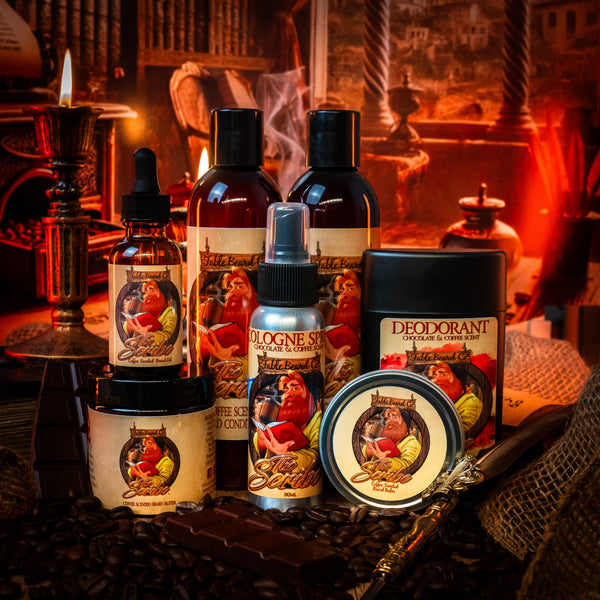
- The Scribe Beard Oil. 1 oz bottle, $18.99. Decadent chocolate, steamed froth and dark espresso. It's my own blend, built on the same five carrier oils as our other beard oils like The Barkeep (castor, coconut, sweet almond, argan and jojoba) plus fragrance. It softens and conditions. It won't grow you a beard, and I'd be suspicious of any oil that says it will.
- The Barkeep Beard Oil. 1 oz bottle, $18.99. No added fragrance. If your skin gets touchy during the itchy weeks, or strong essential-oil blends have bothered you, start here.
Sweet almond and argan come from tree nuts, so if you have a nut allergy, check with your doctor first, and patch test any new oil on your jaw for a day either way. Want to compare scents? The full beard oil collection is in one place.
During a grow-out, use it after a shower on a towel-dried beard: 3 to 5 drops for a short beard, more as it gets longer. Work it down to the skin first, pull it through the ends, then comb. Once a day is plenty for most beards. Step-by-step details are in how to use beard oil.
FAQ
Does beard oil help growth?
Not directly. Beard oil softens the hair and keeps the skin under your beard from drying out, which makes a grow-out more comfortable. It doesn't create new hairs or fill in patches.
Do beard growth oils work?
Most beard growth oils are regular beard oil with rosemary, peppermint or vitamins added. There are no good studies showing those oils grow beard hair. Products that contain minoxidil are a different case, because minoxidil is a drug.
Is castor oil good for beard growth?
There is very little research on castor oil and hair growth, and most of the support is personal stories. It's a good softening oil, which is why many beard oils include it, but it isn't proven to grow hair.
Can rosemary oil grow a beard?
There are no studies on rosemary oil and beards. One small study found it helped thinning scalp hair about as well as 2% minoxidil. If you try it, dilute it in a carrier oil and patch test first, since it can irritate skin.
Is minoxidil safe to use on a beard?
Minoxidil is a medication, and over-the-counter versions are labeled for scalp hair loss, not beards. It can cause side effects like skin irritation. Talk to a doctor or dermatologist before using it on your face.
One last thing
When I finished the research, I went back to that parchment label and added a margin note in pencil: "Softens, yes. Calms the itch, yes. A full beard by the next moon, no record found." Then I put it back in the ledger. A wrong claim is still part of the history, and the next person who finds it will get the correction with it.
Your beard, your story.
— The Scribe