Beard Oil Ingredients: What Belongs in a Good Bottle
The DruidThe grove is gray before sunrise, and the creek moss is the first thing awake. I walk it every morning with a notebook in my coat, and this morning I wrote down six plants by the time the light came through the oaks. Old habit. A man who knows what grows around him knows what he's putting on his face.
So here's the plain answer. Good beard oil ingredients come in two groups. The first is carrier oils, the plant oils that do the actual work of softening hair and keeping the skin underneath from drying out. The second is scent, either fragrance oil or essential oils, which is there for your nose. A good bottle is mostly carrier oils, lists them by name, and uses a small amount of scent made to a recognized safety standard. Our beard oils use five carriers: castor, coconut, sweet almond, argan and jojoba.
- Carrier oils (jojoba, argan, castor and friends) make up nearly the whole bottle and do the softening. Scent is a small share on top.
- Ingredients are listed from most to least, so the first few names on the label tell you what you're really buying.
- "Fragrance" on a label is legal shorthand for a blend. Look for a brand that says its fragrance meets IFRA standards, or go unscented.
- Smell an old bottle before you use it. Oil that smells like crayons or stale nuts has gone rancid.
Carrier oils vs fragrance: the two halves of a bottle
Think of a carrier oil as the body of the blend. It's a fatty oil pressed from a seed, nut or bean, and it's what coats the hair, adds slip so a comb glides, and helps the skin under your beard hold on to moisture. It's called a carrier because it carries the scent too. Essential oils are far too strong to put on skin straight, so they get diluted in it.
The scent half is where labels get vague. Essential oils are distilled or pressed from plants (cedarwood, bergamot, lavender). Fragrance oils are blends made by perfumers and can mix natural and lab-made materials. My field notes would tell you the plant is the more romantic choice. My field notes would also tell you that poison ivy is natural. Natural does not mean gentle, and some essential oils, like cinnamon, clove and many citrus oils, bother sensitive skin as readily as anything made in a lab. What matters is how much is used and whether it's been checked against a safety standard.
Beard oil ingredients in our bottles: five field notes
Here they are in plain terms. Three of them have their own posts in the Library, so I'll keep this short.
Castor oil
Pressed from castor beans. It's the thickest oil on the shelf, almost syrupy, and it gives a blend cushion and a bit of shine. It sits on the hair longer than lighter oils. Let me say this once and clearly: castor oil does not grow beard hair. That claim gets passed around a lot, and there's no good evidence behind it. The full story is in castor oil for beards.
Coconut oil
Medium weight, smooth, and good at reducing that dry, straw-like feel on coarse hair. Plain coconut oil turns solid in a cold room (around 76°F), which is why it's usually one part of a blend rather than the whole thing.
Sweet almond oil
Light, slippery and mild. It spreads easily and helps a comb move through tangles. It comes from a tree nut, so read the allergy note below.
Argan oil
Pressed from the kernels of the argan tree in Morocco. Light to medium feel, sinks in without much grease, and it's a favorite for the dry skin under a beard. Also a tree-nut oil. There's more on it in argan oil for your beard.
Jojoba oil
Not quite an oil. It's a liquid wax from the seed of a desert shrub, and it's close in makeup to the oil your own skin produces. It feels light, absorbs quickly and suits guys with oily skin. Read jojoba oil for your beard for the longer version.
A note I'll make once: sweet almond and argan come from tree nuts. If you have a tree-nut allergy, talk to your doctor before using an oil that contains them, and patch test anything new on a small spot of your jaw for a day.
Other carrier oils you'll see on labels
Other labels add a few more. None are bad. They just behave differently.
| Carrier oil | Feel | Absorption | Best for |
|---|---|---|---|
| Jojoba | Light, dry finish | Fast | Oily skin, daytime use |
| Argan | Light to medium | Fairly fast | Dry skin under the beard |
| Sweet almond | Light, slippery | Medium | Combing out tangles |
| Coconut | Medium, smooth | Medium | Coarse, frizzy hair |
| Castor | Thick, sticky alone | Slow | Shine and cushion in a blend |
| Grapeseed | Very light | Fast | Oily skin, short beards |
| Hemp seed | Light | Fast | Light feel (spoils faster, store it cool) |
| Avocado | Rich, heavy | Slow | Very dry, long or coarse beards |
| Squalane | Very light, silky | Fast | Guys who hate any greasy feel |
Most good blends mix a light, fast oil with a heavier one, so you get comfort at the skin and softness at the ends without a slick face. Grapeseed and hemp seed are high in fragile fats that oxidize sooner, so bottles built mainly on them need more care with heat and light.
What to avoid or double-check
Mineral oil and silicones
This one gets heated. Cosmetic-grade mineral oil is a refined petroleum product, and it's widely used and considered safe on skin. It mostly sits on top, which some people like and some find heavy. Silicones (names ending in "-cone" or "-siloxane," like dimethicone) add slip and shine fast. The real complaint is buildup: they can coat hair and need a proper wash to come off. Neither is poison. They're just a different philosophy from a plant-oil blend, and you should know which one you're paying for.
The word "fragrance"
In the US, a brand can list a whole scent blend as "fragrance" or "parfum" without naming every part. That's legal and normal. What I'd look for is a brand that tells you its fragrance meets IFRA standards. IFRA is the International Fragrance Association, and its standards set limits on, or ban, certain fragrance materials depending on the product and where it's used. Our scented oils use fragrance oil that meets IFRA standards, and the listing says it's free of phthalates. If any scent bothers you, skip it entirely with an unscented beard oil.
Rancid oil
Plant oils age. Heat, light and air slowly oxidize them, and the smell changes from soft and nutty to sharp, sour or like old crayons. Rancid oil won't do your skin any favors. Keep the cap on, keep the bottle out of a sunny window and off a hot dashboard, and trust your nose.
Vitamin E
You'll often see "tocopherol" near the end of a label. It's vitamin E, and in beard oil its main job is as an antioxidant that slows the oil from going rancid. It protects the oil, not your face.
How to read a beard oil label in 30 seconds
- Look at the first three names. Ingredients are listed from most to least. You want named plant oils up front, not mineral oil or a silicone, unless that's what you're after.
- Learn the Latin. Simmondsia chinensis is jojoba. Argania spinosa is argan. Ricinus communis is castor. Prunus amygdalus dulcis is sweet almond. Cocos nucifera is coconut.
- Find the scent line. "Fragrance," "parfum" or a list of essential oils. If you're sensitive, this is the line that matters most.
- Check for allergens. Tree nuts (almond, argan, macadamia) and anything you already know your skin dislikes.
- Look for a size and a way to tell freshness. A dark or opaque bottle and a batch code or date are good signs.
Do that and you'll read beard oil ingredients better than most people in the aisle.
My picks from the grove
- The Druid Beard Oil. 1 oz, $18.99. Castor, coconut, sweet almond, argan and jojoba with an IFRA-compliant fragrance oil of creek moss, tobacco leaf and bergamot. My own blend, and it smells like my morning walk. The listing says the carriers are cold-pressed and the scent lasts 8 to 10 hours.
- The Barkeep Beard Oil. 1 oz, $18.99. The same five carriers with no added fragrance. The honest choice if scent of any kind irritates your skin or your nose.
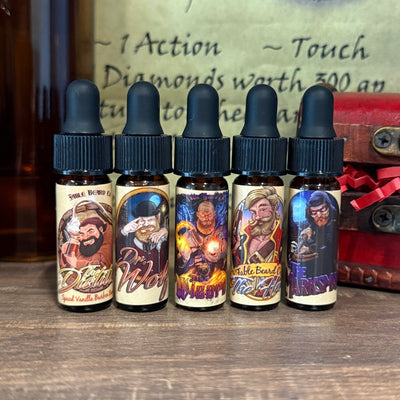
- The Adventure Pack. $29.99 for five 1-dram samples (The Hero, The Wizard, The Marksman, Dr. Wolf and The Distiller). Same oil base, five different scents. A cheap way to learn what your nose likes before you commit to a full bottle.
Curious what all this oil does once it's on your face? What beard oil actually does covers it, and the whole beard oil collection sits in one place.
FAQ
What are the main ingredients in beard oil?
Carrier oils make up most of the bottle, commonly jojoba, argan, castor, sweet almond and coconut. A scented oil adds a small amount of fragrance oil or essential oils. Some brands also add vitamin E to help keep the oil fresh.
What is the best carrier oil for a beard?
There isn't one winner. Jojoba suits oily skin because it feels light, argan is a favorite for dry skin, and castor adds cushion and shine. A blend of a light oil and a heavier one usually feels best.
Is fragrance oil in beard oil safe?
For most people, fragrance used at sensible levels is fine. Look for a brand that says its fragrance meets IFRA standards, which limit or ban certain materials. If scent irritates your skin, choose an unscented oil.
Are essential oils better than fragrance oil in beard oil?
Not automatically. Essential oils come straight from plants, but some of them, like cinnamon, clove and many citrus oils, irritate sensitive skin. What matters more is how much scent is used and whether it meets a safety standard like IFRA's.
How can I tell if beard oil has gone bad?
Smell it. Fresh oil smells soft or of its scent, while rancid oil smells sour, sharp or like old crayons. If it smells off, throw it out and store the next bottle away from heat and sunlight.
One last thing
By the time I got back from the creek this morning, the sun was on the moss and my notebook had a new line in it: know the plant, then trust the bottle. Read the label the way you'd read a trail. The first few names tell you where you're going, and the rest tells you what you'll meet along the way.
Your beard, your story.
— The Druid