Tea Tree Oil for Your Beard: Uses, Risks and How to Dilute It
The GrowerIt was late morning in my greenhouse, the frost already burned off the glass, and I was turning the soil around a young melaleuca in a clay pot. My apprentice had a little brown bottle of its oil in one hand and his chin in the other. "Don't," I said. "Not straight from the bottle. That stuff is a whole tree's worth of opinion in a few drops."
So here's the plain answer. Tea tree oil for beard care can be useful in small amounts, mostly for flaky or itchy skin under the hair, but it has to be diluted first. Used neat, it's strong enough to leave your face red, itchy or burning. Mix a few drops into a carrier oil, patch test it, keep it off your lips, and treat it as an occasional helper for a flaky spell rather than something you slather on daily. It also does nothing for growth, whatever the label on the bottle hopes you'll believe.
- Tea tree oil is mainly used on beards for dandruff and itchy, flaky skin. It won't make hair grow faster or thicker.
- Never put it on your face undiluted. A common starting point for facial skin is about 1%, roughly 6 drops in 1 oz of carrier oil.
- Patch test for a full day first, keep it away from your lips and eyes, and never swallow it.
- Old, air-exposed tea tree oil is more likely to irritate skin. Buy small bottles and keep the cap on tight.
What tea tree oil actually is
Tea tree oil comes from the leaves of Melaleuca alternifolia, a shrubby tree from Australia. It has nothing to do with the tea you drink. The leaves are steam-distilled into a pale, sharp-smelling essential oil that people have used on skin for generations.
The important word is essential. It isn't a carrier oil like jojoba or argan that you can rub straight through a beard. It's concentrated plant compounds, and a few drops carry a lot of punch, which is why it needs a carrier to spread it thin.
Think of it like fertilizer. A spoonful in a watering can feeds the bed. Dump the bag on one plant and you scorch the roots.
What tea tree oil for beard skin can and can't do
Most of the reasons people reach for it come down to the skin under the beard, not the hair itself.
Tea tree oil for beard dandruff
This is the most common reason, and the one with the most going for it. Beard dandruff is often tied to a yeast that lives on oily skin, and tea tree oil has been studied as an ingredient in anti-dandruff shampoos for the scalp, with modest results. Your face isn't your scalp, so don't expect miracles, but a diluted dose can be worth a try during a flaky stretch. If flakes are your main fight, the guide to beard dandruff covers the washing and moisturizing side, which matters more than any single oil.
Itch
Some men find a diluted blend cooling on itchy skin; others find it makes things worse. Plenty of beard itch is just dry skin and new hairs poking back at your face during the early weeks, and that's better handled with a gentle wash and a plain beard oil. The beard itch guide walks through what's normal and when it isn't.
Bumps and breakouts
Tea tree oil shows up in plenty of acne spot treatments. A diluted dab on the occasional bump under a beard is reasonable. It isn't a fix for ingrown hairs that keep coming back.
Growth
No. I grow things for a living, and I'll tell you straight: tea tree oil doesn't plant follicles or speed up the ones you have. Healthy skin makes for a more comfortable beard, and that's as far as the claim goes.
The risks, plainly
Every orchard has a plant that bites back if you handle it wrong. Tea tree is one of them.
- Irritation from neat oil. Undiluted tea tree oil can cause redness, burning, dryness and itching.
- Allergic reactions. A small share of people are allergic to it. You might use it a few times with no trouble and then react, so stop at the first sign of a rash.
- Old oil. Tea tree oil that has been opened and exposed to air and light for a long time breaks down, and the oxidized oil is more likely to irritate. If your bottle smells harsher than when you bought it, replace it.
- Your mouth. Tea tree oil is toxic if swallowed. That's a real concern with a mustache sitting right over your lips, so keep it out of the mustache and away from the lip line entirely.
- Your eyes and pets. Keep it out of your eyes, and keep bottles away from cats and dogs, who can be harmed by it.
If you have eczema, very sensitive skin, or you're pregnant, ask a doctor before trying it. And if a rash, heavy flaking or itch hangs on for more than a couple of weeks no matter what you do, see a dermatologist. That's the one warning I'll repeat to anyone in my greenhouse.
How to dilute tea tree oil for your beard
Here's the almanac version. Common guidance for essential oils on facial skin is to stay around 1%, and to start lower if your skin is touchy. Drop sizes vary from bottle to bottle, so treat these as rough measures, not lab numbers.
| Carrier oil | About 0.5% (gentle start) | About 1% (typical for face) |
|---|---|---|
| 1 teaspoon (5 ml) | Too small to measure | 1 drop |
| 2 teaspoons (10 ml) | 1 drop | 2 drops |
| 1 oz (30 ml) | 3 drops | 6 drops |
A few notes from the potting bench:
- Pick a plain carrier. Jojoba, argan or sweet almond all work. Use a small clean bottle with a dropper, not your favorite scented beard oil. Stacking essential oil on top of a fragranced oil just adds more things your skin might argue with.
- Mix small batches so the oil stays fresh.
- Label it with the date and drop count. Future you will forget.
Patch test first, then use it like this
Before anything touches your beard, put one drop of your diluted mix on the skin along your jaw or inside your forearm. Leave it for 24 hours. Any redness, burning or itch means this one isn't for you, and that's fine. Plenty of good plants don't suit every patch of ground.
If your skin is calm, here's the routine:
- Wash and towel-dry. Damp beard, clean skin. A gentle beard wash beats bar soap here.
- Use 3 to 5 drops of the diluted mix. Warm it in your palms.
- Work it into the skin along the cheeks and jaw, where the flakes live. Stop well short of the mustache and lips.
- Comb it through to spread what's left on the hair.
- Go easy on frequency. A few times a week during a flaky spell is plenty. Give it two to three weeks, then decide if it's helping.
Tea tree beard oil vs. a regular beard oil
You'll find plenty of tea tree beard oil on the shelf. But the everyday job is simpler: soften the hair and keep the skin under it from drying out. A good carrier-oil blend does that on its own.
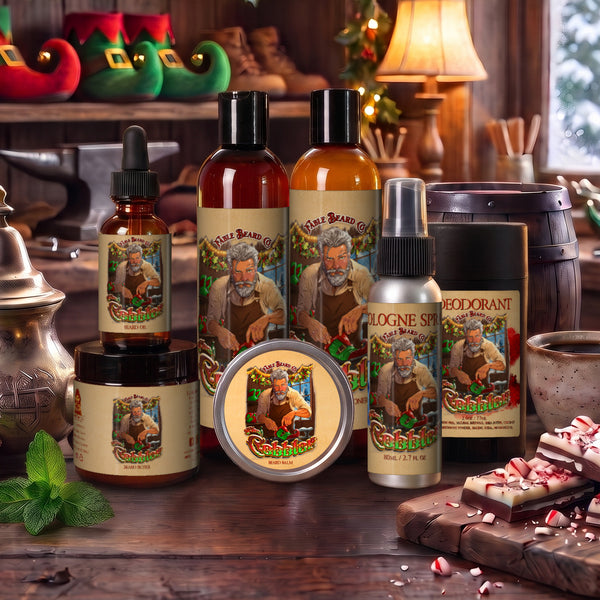
Our beard oils don't contain tea tree. They're built on castor, coconut, sweet almond, argan and jojoba oils, with an IFRA-compliant fragrance in the scented ones. If you want to know what each of those does, the beard oil ingredients guide lays them out like seed packets. A few I'd pull off the shelf:
- The Grower Beard Oil. My own. Crisp apples, fresh pear, warm oud and aged amber in a 1 oz bottle for $18.99. It's the daily oil I'd use on the days you're not using a tea tree mix.
- The Barkeep Beard Oil. No added fragrance, 1 oz, $18.99. If your skin is already cranky, this is the quiet choice, and the one I'd point a sensitive face toward first.
- The Grower Beard Wash. 8 oz, $21.99, sulfate-free with aloe and five oils. Flakes usually start with how you wash, so a gentle beard wash belongs in the plan.
The whole beard oil lineup is in one place if you'd rather browse the scents.
Not sure which scent is yours?
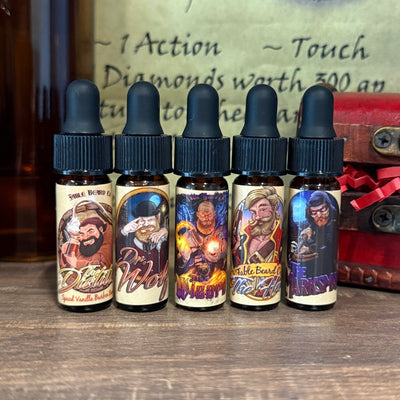
I plant a few rows before I commit to a whole field, and you can do the same with scent. Try the Adventure Pack: five best-selling beard oil samples (The Hero, The Wizard, The Marksman, Dr. Wolf and The Distiller) for $29.99.
FAQ
Is tea tree oil good for your beard?
It can help with dandruff and itchy, flaky skin under the beard when it's diluted. It doesn't grow hair, and used neat it can irritate your skin. A plain carrier-oil beard oil handles everyday softening on its own.
How much tea tree oil should I add to beard oil?
A common starting point for facial skin is about 1%, which works out to roughly 6 drops in 1 oz of carrier oil. Start with about 3 drops if your skin is sensitive, and patch test before using it on your beard.
Can I put tea tree oil directly on my beard?
No. Undiluted tea tree oil can cause redness, burning and itching, especially on facial skin. Always mix it into a carrier oil like jojoba or argan first.
Does tea tree oil help beard dandruff?
It may help a little. Tea tree oil has been studied in anti-dandruff shampoos for the scalp with modest results. Gentle washing and keeping the skin moisturized usually matter more.
Is it safe to use tea tree oil on my mustache?
It's best to skip the mustache. Tea tree oil is toxic if swallowed, and a mustache sits right over your lips. Keep it to the cheeks and jaw.
Do Fable beard oils contain tea tree oil?
No. Our beard oils are made with castor, coconut, sweet almond, argan and jojoba oils, plus fragrance in the scented blends. The Barkeep has no added fragrance.
One last thing
My apprentice did listen, eventually. He mixed six drops into an ounce of jojoba, dabbed it on his forearm, and waited a full day while I made him repot seedlings. No redness. A few weeks later his collar looked cleaner, though he'd also started washing his beard properly, which I suspect did most of the work. He still strutted around the greenhouse like he'd grown the melaleuca himself. The sapling, for the record, is doing better than his patience.
Your beard, your story.
— The Grower